
Scutellerinae
Leach, 1815
jewel bugs, metallic shield bugs, shield-backed bugs
Genus Guides
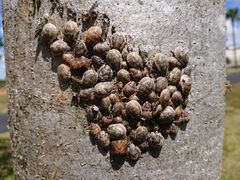
1Scutellerinae is a of shield-backed bugs in the Scutelleridae, erected by William Elford Leach in 1815. Members are characterized by an enlarged scutellum that forms a continuous shield over the and wings. The subfamily includes two tribes: Scutellerini and Sphaerocorini. Some are agricultural pests of small grains, while others are associated with coniferous .
Pronunciation
How to pronounce Scutellerinae: /skjuːˈtɛləriːnaɪ/
These audio files are automatically generated. While they are not always 100% accurate, they are a good starting point.
Identification
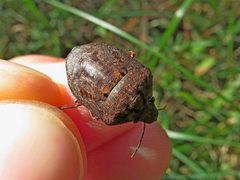
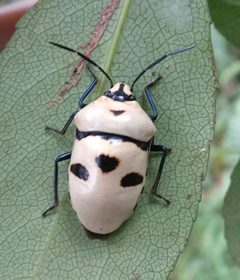
Distinguished from other Heteroptera by the greatly enlarged scutellum that completely covers the and wings, creating a continuous shield-like surface. This feature can cause misidentification as beetles. Many exhibit brilliant metallic coloration. The is distinguished from other scutellerid subfamilies by tribal-level characters; Scutellerini and Sphaerocorini differ in genitalic and other morphological features.
Images
Habitat
Highly variable; includes agricultural fields (small grain crops), jack pine forests, and adjacent uncultivated areas. Specific depends on associations.
Distribution
Widespread; documented from Central California and Wisconsin, USA, with broader distribution implied by -level records.
Diet
Phytophagous; specific feeding habits vary by . Eurygaster feed on developing grains of wheat, barley, and oats. Tetyra bipunctata feeds on phloem of jack pine (Pinus banksiana).
Host Associations
- Triticum aestivum - food plantwheat; Eurygaster
- Hordeum vulgare - food plantbarley; Eurygaster
- Avena sativa - food plantoats; Eurygaster
- Pinus banksiana - food plantjack pine; Tetyra bipunctata
Life Cycle
emerge in spring, mate, and oviposit on plants. Nymphs develop through five instars. New adults appear by summer. Single per year with adults overwintering in protected locations such as leaf litter and duff beneath host trees.
Behavior
in protected locations including leaf litter and duff beneath trees. between cultivated fields and adjacent uncultivated areas observed in some . documented. Feeding on developing seeds causes shriveled grains and reduced yield in agricultural species.
Ecological Role
Agricultural pest of small grain crops in some regions; economic damage through direct feeding on developing kernels. Role in coniferous less documented.
Human Relevance
Economic pest status for Eurygaster in small grain agriculture. Damage to wheat, barley, and oats through feeding on developing kernels.
Similar Taxa
- Scutelleridae (other subfamilies)Other scutellerid lack the tribal characteristics and scutellum of Scutellerinae; distinguished by genitalic and shield structure features.
- Coleoptera (beetles)The enlarged scutellum covering and wings creates superficial resemblance to beetles; distinguished by structure, mouthparts, and other heteropteran features.