
Podisus serieventris
Uhler, 1871
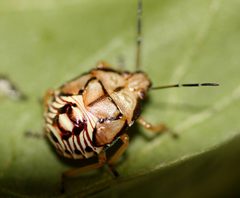
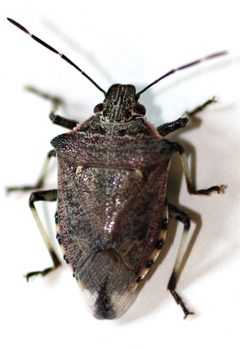
Podisus serieventris is a native to North America. Studies from Cape Breton, Nova Scotia indicate it has one complete per year with of both sexes . The is a that preys on caterpillars, larvae, and other soft-bodied insects. It has been studied as a potential agent, though its effectiveness appears limited when prey decline.
Pronunciation
How to pronounce Podisus serieventris: //poʊˈdaɪsəs ˌsɛriˈɛvntrɪs//
These audio files are automatically generated. While they are not always 100% accurate, they are a good starting point.
Images
Habitat
Overwinters in bark crevices and leaf litter; active in various vegetation types during the growing season.
Distribution
North America; specifically documented in Cape Breton, Nova Scotia and Massachusetts, with range extending across the Nearctic region.
Seasonality
emerge from in late May to early June; laid from late June through early August; nymphal development occurs through summer months.
Diet
; preys on caterpillars, larvae, and other soft-bodied insects. First-stage nymphs have been observed feeding on unhatched of their own and plant juices, though the species requires animal food to complete development.
Life Cycle
One year with one complete annually in Cape Breton (though Massachusetts reportedly have three generations); of both sexes overwinter; incubate 10-15 days; five nymphal instars requiring approximately 45 days on average to reach adulthood; total nymphal development approximately 35 days under laboratory conditions.
Behavior
Overwinters as in protected locations such as bark crevices and leaf litter; females deposit in masses averaging approximately 28 eggs each.
Ecological Role
Predatory insect contributing to of pest ; has been studied in relation to of the black-headed budworm (Peronea variana), though its value as a control factor was limited due to starvation mortality when prey populations declined.
Human Relevance
Investigated as a agent for forest and agricultural pests; potential value in programs, though effectiveness varies with prey availability.
Similar Taxa
- Podisus maculiventrisBoth are predatory stink bugs in the Podisus used in ; P. maculiventris () is more widely studied and commercially available for pest management, while P. serieventris has been less extensively researched.
Sources and further reading
- BugGuide
- Wikipedia
- GBIF taxonomy match
- iNaturalist taxon
- NCBI Taxonomy
- Stink Bugs Lay Dark or Light Eggs, Depending on Amount of Light
- Stink Bugs as Biocontrol Agents Against … Stink Bugs
- Bug Eric: New Year’s Insects and Spiders
- Stink Bugs: New IPM Guide for Midwestern Corn, Soybean Growers
- Bugs in orange and black, predator and prey: Two-spotted stink bug, Perillus bioculatus, and Colorado potato beetle, Leptinotarsa decemlineata — Bug of the Week
- Yellowmargined Leaf Beetle: New Guide Offers Pest Management Tips for Organic Growers
- THE BIOLOGY OF PODISUS SERIEVENTRIS UHLER, IN CAPE BRETON, NOVA SCOTIA