
Oxycarenus
Fieber, 1837
ground bugs, seed bugs
Species Guides
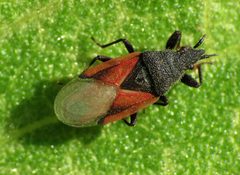
2- Oxycarenus hyalinipennis(cotton seed bug)
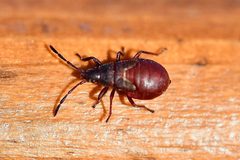
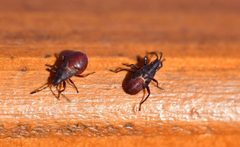
- Oxycarenus lavaterae(lime seed bug)
Oxycarenus is a of ground bugs in the Oxycarenidae, comprising approximately 55 described . Several species are documented as important agricultural pests, particularly of cotton and other malvaceous crops. The genus exhibits notable range expansion dynamics in response to climate change, with some species demonstrating rapid northward spread facilitated by behavioral .
Pronunciation
How to pronounce Oxycarenus: /ˌɒksɪˈkæɹɪnəs/
These audio files are automatically generated. While they are not always 100% accurate, they are a good starting point.
Identification
Members of Oxycarenus can be distinguished from other lygaeoid by their placement in the Oxycarenidae (formerly Oxycareninae within Lygaeidae). Specific identification to requires examination of genitalic characters and wing venation patterns.
Images
Habitat
occur in association with their plants, primarily in agricultural and semi-natural environments. In southern Ghana, species have been documented in supporting Malvaceae including kapok and related tree species.
Distribution
The has a broad distribution spanning Europe, Asia, Africa, and South America. Oxycarenus hyalinipennis occurs across the Mediterranean region, Middle East, South and Southeast Asia, and sub-Saharan Africa, with introduced in Brazil and Paraguay. Oxycarenus lavaterae has shown rapid northward and eastward expansion across Europe since 2007, with a distinct rapid expansion phase beginning in 2017.
Diet
Feeding is restricted to seeds of plants. Documented hosts include of Malvaceae: cotton (Gossypium), Hibiscus, Sida, Ceiba pentandra (kapok), Eriodendron anfractuosum, and Cola cordifolia.
Host Associations
- Gossypium - cotton
- Hibiscus -
- Sida -
- Ceiba pentandra - kapok
- Eriodendron anfractuosum -
- Cola cordifolia -
Behavior
Oxycarenus lavaterae exhibits basking to elevate body temperature, which mitigates cold stress and enhances survival in northern regions. This behavioral has been identified as a key factor enabling rapid range expansion under conditions of increased downward shortwave radiation.
Human Relevance
Several are important crop pests, particularly Oxycarenus hyalinipennis (cotton ), which damages cotton and other malvaceous crops. The has been subject to resistance studies, with laboratory-selected resistance to imidacloprid documented in O. hyalinipennis. Range expansion of O. lavatere in Europe has implications for biodiversity conservation and pest management strategies.
Similar Taxa
- LygaeidaeHistorically classified within Lygaeidae as Oxycareninae; now separated into distinct Oxycarenidae based on phylogenetic revisions
More Details
Taxonomic Note
The classification of Oxycarenus has been revised, with the group elevated from Oxycareninae within Lygaeidae to Oxycarenidae. Some sources may still list the under Lygaeidae.
Climate Change Response
Research on O. lavaterae demonstrates how reduced air pollution since the 1990s ('global brightening') has increased downward shortwave radiation, providing thermal benefits that facilitate range expansion through enhanced basking opportunities.
Sources and further reading
- BugGuide
- Wikipedia
- GBIF taxonomy match
- iNaturalist taxon
- NCBI Taxonomy
- Catalogue of Life
- Oxycarenus hyalinipennis . [Distribution map].
- Ecology of Oxycarenus species (Heteroptera: Lygaeidae) in southern Ghana
- The Brightening Sky and the Bug’s Advance: Unraveling the Drivers of Oxycarenus lavaterae Range Expansion
- The Brightening Sky and the Bug's Advance: Unraveling the Drivers of Oxycarenus lavaterae Range Expansion
- Adana İlinde pamukta zararlı Çiğit emici böceği, Oxycarenus hyalinipennis (Costa) (Hemiptera: Lygaeidae) ile birlikte saptanan avcı arthropoda türleri ve popülasyon değişimleri Predatory arthropod species associated with the cotton seed bug, Oxycarenus hyalinipennis (Costa) (Hemiptera: Lygaeidae), and their population changes in cotton in Adana Province, Turkey
- Fitness costs in Oxycarenus hyalinipennis Costa (Hemiptera: Lygaeidae) associated with laboratory-selected resistance to imidacloprid
- A transcriptome sequence dataset characterizing eggs, nymphs and adults of Oxycarenus hyalinipennis, the cotton seed bug.
- Two-way transcriptome approach for the identification of common gene targets across four insect orders and its validation in Oxycarenus laetus.