Acanthocephala
Koelreuter, 1771
thorny-headed worms, spiny-headed worms, acanthocephalans
Species Guides
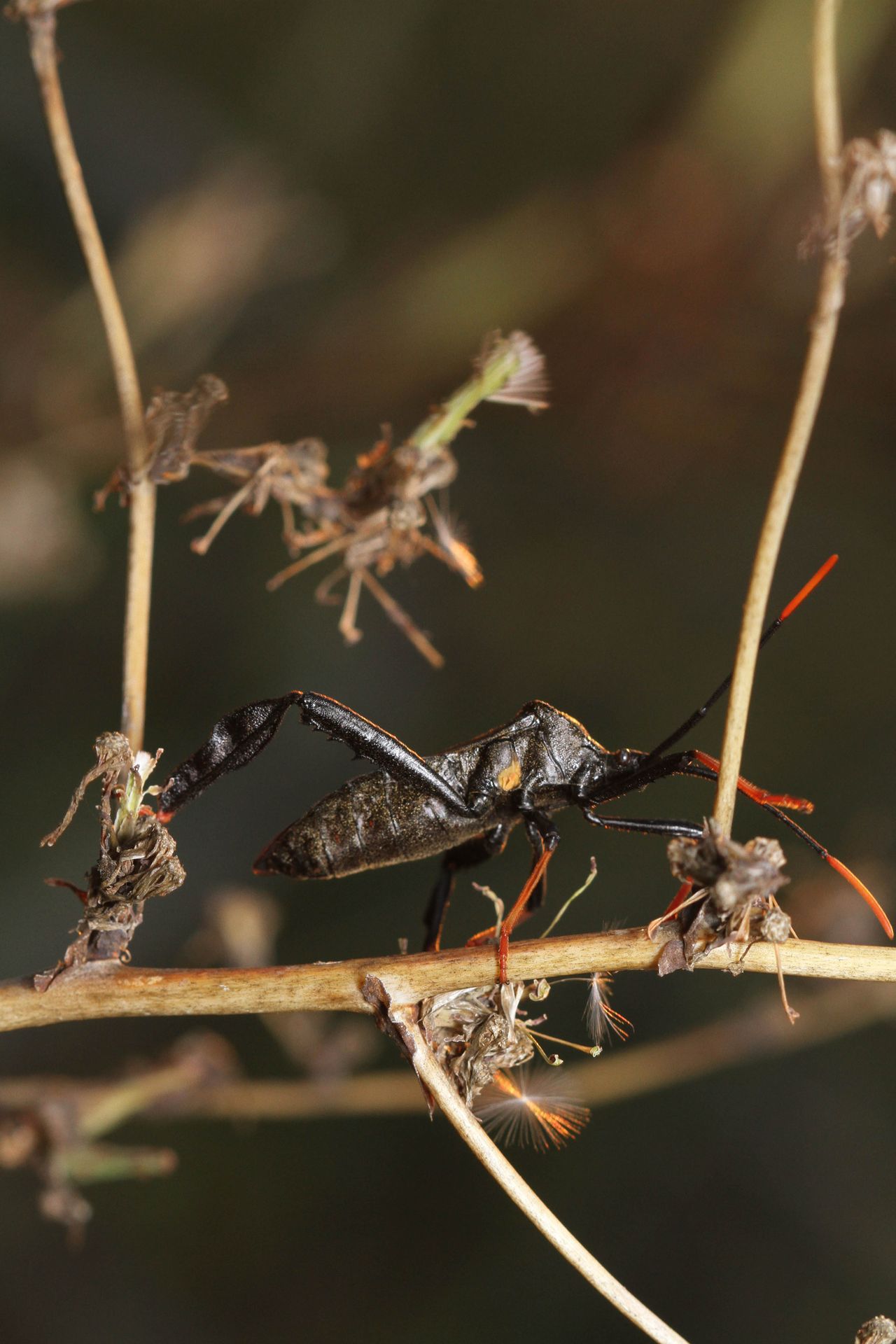
5- Acanthocephala alata(leaf-footed bug)
- Acanthocephala declivis(Giant leaf-footed bug)
- Acanthocephala femorata(Florida Leaf-footed Bug)
- Acanthocephala terminalis(leaf-footed bug)
- Acanthocephala thomasi(giant agave bug)
Acanthocephala is a of obligate endoparasitic worms known as thorny-headed or spiny-headed worms, characterized by an eversible armed with recurved hooks used to attach to intestinal walls. They lack a mouth and , absorbing nutrients directly through their tegument. The phylum contains approximately 1,200–1,420 described with complex involving intermediate hosts and vertebrate definitive hosts. Recent molecular evidence indicates they are highly modified rotifers, now sometimes classified within Syndermata or Rotifera.
Pronunciation
How to pronounce Acanthocephala: //əˌkænθoʊˈsɛfələ//
These audio files are automatically generated. While they are not always 100% accurate, they are a good starting point.
Images
Habitat
stages inhabit the intestines of vertebrate definitive including fish, birds, mammals, and rarely amphibians and reptiles. Larval stages (acanthor, acanthella, cystacanth) develop in intermediate hosts, primarily crustaceans and insects. The group occurs across marine, freshwater, and terrestrial systems corresponding to host distributions.
Distribution
distribution spanning marine, freshwater, and terrestrial environments worldwide. Found wherever suitable intermediate and vertebrate definitive hosts co-occur. The oldest known fossil is Juracanthocephalus daohugouensis from the Middle Jurassic (approximately 165 million years ago) of China; additional fossil have been recovered from Late Cretaceous deposits in Brazil.
Diet
Lacks a mouth and alimentary canal entirely. Absorbs predigested nutrients directly across the body wall (tegument) from the 's intestinal contents. This represents a secondary loss of the as an to .
Host Associations
- vertebrates - definitive primarily bony fishes, birds, and mammals; inhabit small intestine
- arthropods - intermediate primarily crustaceans and insects; larval development occurs in these
- humans - incidental rare documented; eight isolated from humans including Moniliformis moniliformis (most common)
Life Cycle
Complex indirect with two obligate . containing acanthor larvae are released in definitive host and ingested by intermediate hosts. The acanthor hatches and develops into the acanthella stage, which penetrates the gut wall and encysts in the body cavity, transforming into the infective cystacanth stage. The cystacanth possesses all organs except reproductive structures. Transmission to the definitive host occurs through ingestion of the infected intermediate host. Upon reaching the definitive host intestine, the cystacanth excysts, everts its to pierce the gut wall, and matures to . Complete life cycles have been fully described for only approximately 25 .
Behavior
use eversion and invagination to attach to intestinal walls via recurved hooks, remaining fixed in position while feeding. Some (perforating acanthocephalans) can penetrate through the intestinal wall into the abdominal cavity. Certain species manipulate intermediate host to increase transmission probability: for example, Polymorphus paradoxus in Gammarus lacustris reduces photophobia, induces surface-clinging behavior, and alters pigmentation, making the host more visible to avian . Serotonin alterations have been implicated in this behavioral manipulation. Males use cement gland secretions to plug the female vagina after mating, preventing subsequent inseminations.
Ecological Role
Act as regulating and serving as connectors between and vertebrate . Some accumulate organic micropollutants at concentrations exceeding those in their crustacean hosts, potentially functioning as biological pollutant sinks that reduce host contaminant burdens.
Human Relevance
Cause acanthocephaliasis in humans, though are rare. The earliest documented human infection dates to approximately 1869 ± 160 BC in Utah (Moniliformis clarki). Eight have been isolated from humans, with Moniliformis moniliformis most common. Infections typically result from ingestion of raw or undercooked insect intermediate (particularly scarabaeid ). Clinical include gastrointestinal disturbances. Significant economic impact in aquaculture: acanthocephalosis affects Atlantic salmon, rainbow and brown trout, tilapia, and tambaqui. Cystacanths in commercially harvested lobsters cause economic losses to fishermen. No known prevention or control methods exist.
Similar Taxa
- RotiferaRecent molecular indicates Acanthocephala are highly modified rotifers; the unified is sometimes called Syndermata or Rotifera (class Hemirotatoria, subclass Acanthocephala)
- Cestoda (tapeworms)Both lack and absorb nutrients through tegument, but are not closely related; this represents convergent to
- Digenea (flukes)Both are endoparasitic helminths with complex , but Digenea possess and typically use molluscan rather than intermediate
- NematodaBoth are pseudocoelomate with superficially similar body plans, but differ fundamentally in ( hooks vs. stylet), , and phylogenetic position
More Details
Evolutionary relationships
Long classified as a distinct , analysis has demonstrated Acanthocephala are descended from and should be treated as highly modified rotifers. This unified group is termed Syndermata or expanded Rotifera, with acanthocephalans as a subclass of class Hemirotatoria.
Morphological adaptations
Extensive organ loss through evolutionary reduction: no mouth, gut, excretory system (though some retain protonephridia), or . The apparatus includes retractor muscles, lemnisci (fluid ), and complex hook arrangements. is common, with up to 343n recorded in some . Many are unusually large, including nerve cells and uterine bell cells.
Nervous system
The contains fewer than 100 in the cerebral ganglion, which lies to the . Males possess genital ganglia (15–30 cells) and a bursal ganglion; females have a vaginal ganglion discovered in 1989. Sense organs are poorly developed, with posterior receptors facilitating copulation and sensory organs of limited function.
Research significance
Complete have been elucidated for only about 25 of approximately 1,200–1,420 described , leaving major gaps in basic . The group represents a distinct evolutionary of evolution and -parasite interactions, with behavioral manipulation of intermediate hosts serving as a model system for studying parasite-extended phenotypes.
Sources and further reading
- BugGuide
- Wikipedia
- iNaturalist taxon
- NCBI Taxonomy
- Catalogue of Life
- pleasing fungus beetles | Beetles In The Bush
- Acanthocephala
- Acanthocephala
- Ecology of the Acanthocephala
- Life history of Corynosoma constrictum Van Cleave (Acanthocephala: Polymorphidae)
- The Life Cycle and Ecology of Octospiniferoides Chandleri Bullock 1957 (Acanthocephala).
- Characterization of the host-parasite relationship of Polymorphidae (Acanthocephala) in Nannopterum brasilianus (Aves, Phalacrocoracidae) in the Soure Marine Extraction Reserve, Pará.