
Aradus similis
Say, 1832
flat bug
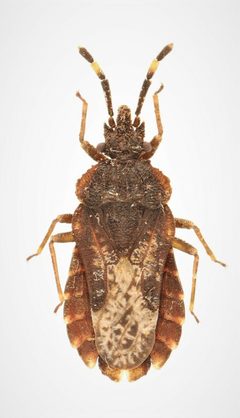
Aradus similis is a of flat bug in the Aradidae, described by Thomas Say in 1832. It is native to North America and belongs to a group of insects commonly known as flat bugs due to their strongly dorsoventrally flattened bodies. Members of the Aradus are typically associated with dead wood and bark . The species is one of many in a genus with both extant and fossil representatives, including species preserved in Baltic amber dating to the Eocene epoch.
Pronunciation
How to pronounce Aradus similis: /ˈaɾa.dus ˈsi.mi.lis/
These audio files are automatically generated. While they are not always 100% accurate, they are a good starting point.
Images
Habitat
Associated with dead trees and bark, typical of the Aradidae. Extant of flat bugs commonly live on and under the bark of dead trees.
Distribution
North America. GBIF records confirm presence in North America.
Similar Taxa
- Aradus macrosomusA fossil from Baltic amber distinguished by larger body size; A. similis is extant and North American
- Other Aradus speciesThe Aradus contains numerous , many of which require detailed examination for proper identification; A. similis was described in 1832 and is established on morphological grounds
More Details
Taxonomic history
Described by Thomas Say in 1832, making it one of the earlier described in the Aradus. The genus itself has a long taxonomic history with both extant and extinct species.
Fossil relatives
While A. similis itself is not known from fossils, the Aradus is well represented in the fossil record. At least 14 of Aradus have been described from Baltic amber inclusions dating to approximately 45 million years ago (Eocene). The preservation of flat bugs in amber is facilitated by their association with dead wood and tree resin.