
Aradus depressus
(Fabricius, 1794)
pale-shouldered flatbug
Aradus depressus is a flat bug in the Aradidae, the most common and widespread in its . It occurs across the Palearctic from Ireland to Siberia, extending to the Caucasus Mountains in the southeast and reaching elevations up to 1,600 meters in the Alps. The species is strongly associated with hardwood trees colonized by fungi, particularly birch, and exhibits distinctive seasonal in spring.
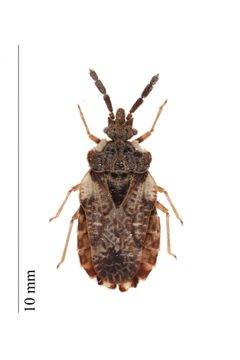
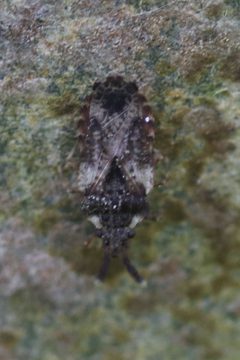
Pronunciation
How to pronounce Aradus depressus: /ˈa.ra.dus dɛˈprɛs.us/
These audio files are automatically generated. While they are not always 100% accurate, they are a good starting point.
Images
Habitat
Hardwood forests where trees are infested by fungi, especially bracket fungi such as Trametes and Oxyporus. Found on living or decaying wood of broadleaf trees.
Distribution
Palearctic region from Ireland eastward to Siberia; southeast range extends to the Caucasus Mountains. Present throughout Europe including Belgium (Flemish Region, Walloon Region, Brussels-Capital Region) and Denmark. Occurs up to 1,600 m elevation in the Alps.
Seasonality
Females fly readily from mid-April to end of May. Activity period likely extends beyond this window, but specific timing of other life stages is not documented.
Diet
Feeds on fungi in decaying hardwood; associated with fungal Trametes and Oxyporus. Specific nutritional mode (mycophagy vs. other) not explicitly confirmed.
Host Associations
- Betula - preferred both nymphs and
- Acer -
- Quercus -
- Ulmus -
- Salix -
- Populus -
- Fagus -
- Alnus -
- Malus -
- Pinus - exceptional occurrence per literature indications
Life Cycle
Both nymphs and occur on trees. Specific developmental stages and duration not documented.
Behavior
Females exhibit from mid-April to end of May, often traveling far from potential . This seasonal flight pattern is pronounced and readily observed.
Ecological Role
Associated with fungal decomposition of hardwood trees; role in nutrient cycling through association with wood-decaying fungi.
More Details
Taxonomic authority
Originally described as Acanthia depressus by Fabricius in 1794.
Observation frequency
iNaturalist records 991 observations, indicating it is relatively well-documented by citizen scientists.