
Abedus indentatus
(Haldeman, 1854)
Notched Giant Water Bug
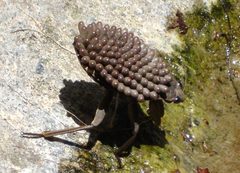
Abedus indentatus is a of giant water bug in the Belostomatidae, commonly known as the Notched Giant Water Bug. It occurs in freshwater across Central America and North America. Like other members of its , males exhibit paternal care by carrying on their backs until hatching. The species is a predatory aquatic insect that uses venom to subdue prey.
Pronunciation
How to pronounce Abedus indentatus: /əˈbeɪdəs ˌɪndɛnˈteɪtəs/
These audio files are automatically generated. While they are not always 100% accurate, they are a good starting point.
Identification
Distinguished from other giant water bugs by the notched or indented pronotum that gives the its . Males can be identified by the presence of adhered to their backs during the breeding season. Similar to Abedus herberti and other Abedus species, but specific diagnostic features require examination of pronotal structure.
Images
Habitat
Freshwater aquatic environments including ponds, lakes, and slow-moving streams.
Distribution
Central America and North America.
Life Cycle
Males carry on their backs after females adhere them; males guard, aerate, and clean eggs to prevent fungal until hatching.
Behavior
Males provide exclusive parental care by transporting and guarding masses. are aquatic that capture prey with forelegs. Will bite in self-defense if handled.
Ecological Role
in freshwater . Paternal care represents a notable reproductive strategy among insects.
Human Relevance
Not a significant pest or directly utilized . Related species in the (Abedus herberti) are consumed as "Mexican Caviar" in some cultures, but no specific human use documented for A. indentatus. Bites can be painful but are not medically significant.
Similar Taxa
- Abedus herbertiClosely related congeneric with similar and paternal care ; distinguished by subtle pronotal differences
- Belostoma speciesOther giant water bugs in Belostomatidae with similar body plan and aquatic predatory habits; Belostoma generally larger with different -carrying (some on vegetation rather than male backs)
Misconceptions
Internet hoaxes have misused images of male Abedus carrying to fabricate stories about "killer " spreading lethal viruses. The sponge-like pattern of eggs on male backs has been falsely presented as human skin . These insects are not dangerous to humans beyond a painful defensive bite.
More Details
Paternal Care
Males of Abedus indentatus, like other Abedus , are among the few insects exhibiting exclusive male parental care. The female cements to the male's back, where he carries them for approximately 1-2 weeks, performing pumping motions to aerate them and to remove fungi.