
Schizopteridae
Reuter, 1891
minute litter bugs, jumping soil bugs, big-eyed minute litter bugs (Hypselosomatinae)
Genus Guides
4- Corixidea(jumping soil bugs)
- Glyptocombus(jumping soil bugs)
- Nannocoris
- Schizoptera(minute litter bugs)
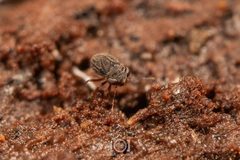
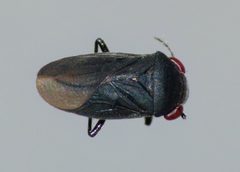
is the largest in the infraorder Dipsocoromorpha, comprising 56 and over 270 described . These are among the smallest true bugs (0.5–2.0 mm), inhabiting cryptic microhabitats primarily in tropical and subtropical regions. The family is divided into three : Schizopterinae, Ogeriinae, and Hypselosomatinae. Many species remain undescribed, with estimates suggesting substantial undiscovered diversity, particularly in tropical rainforests.
Pronunciation
How to pronounce Schizopteridae: //ˌskɪtsɒpˈtɛrɪdiː//
These audio files are automatically generated. While they are not always 100% accurate, they are a good starting point.
Identification
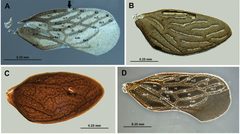
Members can be distinguished by their minute size (0.5–2.0 mm), enlarged forecoxae, and varying degrees of abdominal and genitalic asymmetry in males. Wing venation ranges from simple to complex patterns; some possess true . Hypselosomatinae (big-eyed minute litter bugs) are diagnosed by large , 4-segmented , and distinct wing venation. Male Chinannus species possess a diagnostic 'wing organ'—an enlarged, sclerotized wing with fine structures used in species identification.
Images
Habitat
Primarily collected from rainforest leaf litter; some occupy specialized microhabitats including decaying palms, bark, low vegetation, the zone of streams, and mangroves.
Distribution
Primarily tropical, with greatest diversity in the Australian region (~25% of described ). New World range extends from southern United States to northern Argentina. Present in tropical Africa with many species yet to be described. Also recorded from China (Yunnan, Hong Kong), Southeast Asia, and the Lesser Antilles.
Human Relevance
Specimens are collected using specialized techniques and are poorly represented in natural history collections. Bulk from tropical localities frequently yield undescribed species, indicating the group is understudied despite its potential significance for understanding true biodiversity. The Chinannus was recently revised based on examination of over 950 bulk samples from 23 countries, demonstrating that curated collection material remains a critical resource for discovery.
Similar Taxa
- DipsocoridaeAlso in infraorder Dipsocoromorpha; distinguished by different wing venation patterns and genitalic structures; has more complex male genitalic asymmetry and enlarged forecoxae.
- CeratocombidaeOther in Dipsocoromorpha; differs in forecoxal structure and degree of abdominal asymmetry in males.
Sources and further reading
- BugGuide
- Wikipedia
- GBIF taxonomy match
- iNaturalist taxon
- NCBI Taxonomy
- Catalogue of Life
- Twenty-six New Species of Minute Litter Bugs Described in New Book
- New genera of Hypselosomatinae (Heteroptera : Schizopteridae) from Australia
- Taxonomic review of Kokeshia Miyamoto, 1960 from China, with description of ten new species (Hemiptera: Heteroptera: Schizopteridae)
- Taxonomic revision of the New World big-eyed minute litter bug genus Ommatides Uhler (Hemiptera: Schizopteridae)
- From "insect soup" to biodiversity discovery: taxonomic revision of Peloridinannus Wygodzinsky,1951 (Hemiptera: Schizopteridae), with description of six new species
- A NEW SPECIES OF PINOCHIUS CARAYON (HEMIPTERA: SCHIZOPTERIDAE), FIRST RECORD FROM AUSTRALIA
- Synopsis of Schizopteridae (Hemiptera, Heteroptera, Dipsocoromorpha) from the United States, with description of seven new species from the US and Mexico
- Taxonomic revision of the minute litter bug subgenus Schizoptera (Zygophleps) McAtee & Malloch, 1925 (Heteroptera: Dipsocoromorpha: Schizopteridae)
- A new genus and species of minute litter bugs family Schizopteridae Reuter, 1891 from China (Hemiptera, Heteroptera, Dipsocoromorpha).