
Vatiga
Drake & Hambleton, 1946
cassava lace bugs
Species Guides
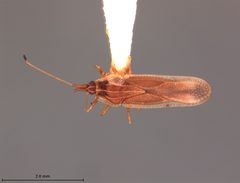
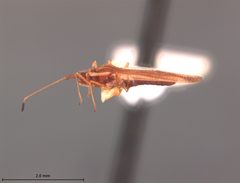
1- Vatiga illudens(cassava lace bug)
Vatiga is a of lace bugs ( Tingidae) containing approximately 11 described . The genus is native to the Neotropical region and has become economically significant as an pest in cassava-growing regions worldwide. Species in this genus are highly -specific, feeding exclusively on cassava (Manihot esculenta). The most extensively studied species are Vatiga illudens and Vatiga manihotae, which have been introduced to Indonesia and Africa, posing threats to food security in these regions.

Pronunciation
How to pronounce Vatiga: /ˈwɑ.ti.ɡə/
These audio files are automatically generated. While they are not always 100% accurate, they are a good starting point.
Identification
Members of Vatiga can be distinguished from other lace bug by their association with cassava and Neotropical distribution. Vatiga illudens specifically is characterized by a bearing a pair of frontal spines, a trait used in morphological identification keys. The genus is part of the Tinginae within Tingidae, though subfamily-level classification is not always explicitly confirmed in literature. -level identification requires examination of genitalia and other fine morphological characters.
Images
Habitat
Agricultural , specifically commercial cassava (Manihot esculenta) crop fields. and nymphs occur on the basal and middle leaves of cassava plants. In invaded regions, established occupy lowland, medium, and highland areas where cassava is cultivated.
Distribution
Native to the Neotropical region, with confirmed records from Brazil (Acre, Distrito Federal, Mato Grosso do Sul, Minas Gerais, Rio Grande do Norte), Colombia, Ecuador, Guyana, and Venezuela. established in North America (Antigua and Barbuda, Barbados, Cuba, Dominica, Dominican Republic, Grenada, Guadeloupe, Haiti, Jamaica, Martinique, Montserrat, Puerto Rico, Saint Kitts and Nevis, Saint Lucia, Saint Vincent and the Grenadines, Trinidad and Tobago, Florida USA), Africa (Mauritius, Réunion), and Asia (Indonesia: Java, Bali, Nusa Tenggara, with first Indonesian record in East Java 2021). Predictive models indicate high suitability for expansion into Central Africa, Asia, and additional Indonesian regions including South Sulawesi and South Papua.
Seasonality
Peak occurs during the start of the dry season; in Brazil, highest observed February through April. Activity patterns correlate with precipitation during the coldest quarter and temperature during the wettest quarter.
Diet
Phloem sap feeding through . All known feed exclusively on cassava (Manihot esculenta).
Host Associations
- Manihot esculenta - primary cassava/yuca; exclusive for all known in
Life Cycle
stage averages 11.5 ± 3.5 days. Nymphal stage comprises five instars lasting 15 ± 2 days. longevity ranges 23–90 days. Oviposition occurs endophytically within leaves and continues for up to 34 days of adult life. : 61–94 eggs per female.
Behavior
Exhibits aggregated spatial distribution following a negative binomial pattern, with and nymphs clustering on basal and middle leaves of plants. This clumped distribution has been confirmed through multiple indices including variance/mean ratio, Morisita index, and K exponent.
Ecological Role
Agricultural pest causing premature defoliation and reduction of aerial plant parts. At high densities, reduce cassava root productivity by 18–39%. Recent spread to Indonesia and Africa poses significant threats to food security in cassava-dependent regions.
Human Relevance
Major economic pest of cassava, a staple crop feeding approximately 800 million people worldwide. establishment in new regions necessitates monitoring, biosecurity measures, and . Natural enemy including Hemiptera, Diptera, Coleoptera, Orthoptera, and Araneae have been identified in invaded areas for potential .
Similar Taxa
- Other Tingidae generaVatiga is distinguished by exclusive cassava association; other lace bug typically feed on diverse plant
- StephanitisBoth are lace bug with reticulate forewings, but Stephanitis feed on azalea, rhododendron, and other ornamentals rather than cassava
More Details
Invasion history
First detected in Indonesia in East Java Province in 2021, subsequently reported in Bali and predicted to spread throughout suitable areas in southern Indonesia. First African record from Réunion Island; nearby mainland areas are considered at risk for future .
Predictive modeling
distribution models using MaxEnt indicate precipitation during the coldest quarter (BIO19) contributes 66.2–67.4% to suitability, with temperature during the wettest quarter (BIO8) contributing 18.3%. Model is high (AUC 0.81–0.925).
Sources and further reading
- BugGuide
- Wikipedia
- GBIF taxonomy match
- iNaturalist taxon
- NCBI Taxonomy
- Catalogue of Life
- Vatiga illudens (Drake). [Distribution map].
- DISTRIBUCIÓN ESPACIAL DE Vatiga spp. (HEMIPTERA: TINGIDAE) EN EL CULTIVO DE YUCA
- Spatial prediction of Vatiga illudens (Hemiptera: Tingidae) on cassava crops: a newly invasive pest in Indonesia
- Spatial Prediction of Vatiga illudens (Hemiptera: Tingidae) on Cassava Crops: A Newly Invasive Pest in Indonesia
- Eksplorasi dan Deskripsi dan Kunci Determinasi Musuh Alami Hama Kutu Kepik (Vatiga illudens Drake 1922) (Hemiptera: Tingidae) dari Pertanaman Singkong (Manihot esculenta) di Kabupaten Banyumas, Provinsi Jawa Tengah
- Predicting the potential invasion suitability of regions to cassava lacebug pests (Heteroptera: Tingidae:Vatigaspp.)
- Occurrence of Cassava Lace Bug <i>Vatiga illudens</i> (Drake, 1922) (Hemiptera: Heteroptera: Tingidae) in Bali, Indonesia