
Leptopharsa
Stål, 1873
lace bugs
Species Guides
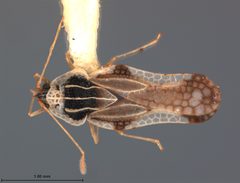
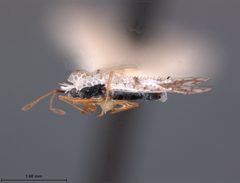
3Leptopharsa is a of lace bugs in the Tingidae containing more than 120 described . Species within this genus are associated with diverse plants, including palms and rubber trees, and several are economically significant agricultural pests. Leptopharsa gibbicarina is a major pest of oil palm in Colombia and Venezuela, vectoring the Pestalotiopsis fungal complex that causes leaf spot . Leptopharsa heveae is a principal pest of rubber tree plantations in Brazil, where it can reduce latex productivity by up to 30%.
Pronunciation
How to pronounce Leptopharsa: /lɛp.toʊˈfɑr.sə/
These audio files are automatically generated. While they are not always 100% accurate, they are a good starting point.
Images
Habitat
Tropical and subtropical agricultural plantations; oil palm (Elaeis guineensis) plantations in Colombia and Venezuela for L. gibbicarina; rubber tree (Hevea brasiliensis) plantations in Brazil for L. heveae. Specific microhabitat includes leaf surfaces, particularly the apex and middle sections of mature leaves where aggregate.
Distribution
South America: Colombia, Venezuela, Brazil (states of Amazonas, Espírito Santo, Goiás, Mato Grosso, Pará, Rondônia, São Paulo), French Guiana. L. gibbicarina specifically documented from Puerto Wilches, Santander, Colombia and Venezuelan oil palm regions. L. heveae recorded from Itiquira, Mato Grosso, Brazil and across Brazilian rubber-growing regions.
Seasonality
peaks observed at end of October and beginning of November for L. heveae in Brazilian rubber plantations; corresponding peaks for its Erythmelus tingitiphagus occur simultaneously.
Diet
Phytophagous; piercing-sucking feeding on leaf tissues. L. gibbicarina feeds on oil palm (Elaeis guineensis) leaflets and has been observed on Aiphanes horrida, Bactris gasipaes, and Elaeis oleifera. L. heveae feeds on rubber tree (Hevea brasiliensis) leaves.
Host Associations
- Elaeis guineensis - primary oil palm, main for L. gibbicarina
- Hevea brasiliensis - primary rubber tree, main for L. heveae
- Aiphanes horrida - secondary palm
- Bactris gasipaes - secondary peach palm
- Elaeis oleifera - secondary American oil palm
- Pestalotiopsis palmarum - vectored fungal complex transmitted by L. gibbicarina
- Pestalotiopsis glandicola - vectored fungal complex transmitted by L. gibbicarina
Life Cycle
For L. gibbicarina: total 69–72 days. stage: 15–16 days. Nymph stage: 18.9–22 days, with five instars (mortality rates: instar I 0.06, II 0.03, III 0.01, IV 0.10, V 0.14). longevity: 32–37 days. time: 33.2 days. Net reproductive rate (R₀): 10.0. Intrinsic growth rate: 0.03. Egg mortality rate: 0.22.
Behavior
Aggregates on leaf surfaces, preferring apex and middle sections of mature leaves. Piercing-sucking feeding creates entry points for fungal . mate in 1:1 sex ratio. Females oviposit on leaf surfaces. High potential facilitates severity in crops.
Ecological Role
Agricultural pest; L. gibbicarina serves as primary insect of Pestalotiopsis leaf spot complex in oil palm, directly linking insect feeding damage to fungal disease establishment. L. heveae reduces photosynthetic area and weakens rubber trees, limiting latex production. Both support for specialized natural enemies including the Erythmelus tingitiphagus and predatory ants Crematogaster spp.
Human Relevance
Significant economic pest of oil palm and rubber tree plantations. L. gibbicarina and associated Pestalotiopsis complex can reduce oil palm production by up to 36%. L. heveae can cause up to 30% reduction in latex productivity. Subject to research including (Crematogaster , Erythmelus releases) and efficacy studies (benzoylphenyl ureas: lufenuron, novaluron, teflubenzuron, triflumuron). Monitoring protocols developed using spatial distribution analysis to optimize sampling intensity.
Sources and further reading
- BugGuide
- Wikipedia
- GBIF taxonomy match
- iNaturalist taxon
- NCBI Taxonomy
- Catalogue of Life
- Leptopharsa heveae . [Distribution map].
- Effect of Benzoylphenyl Ureas on Survival and Reproduction of the Lace Bug, Leptopharsa gibbicarina
- Population Parameters of Leptopharsa Gibbicarina (Hemiptera: Tingidae) Pest Of Oil Palm
- Parasitismo de ovos de Leptopharsa heveae Drake & Poor por Erythmelus tingitiphagus (Soares) em plantios de seringueira com aplicação de produtos fitossanitários
- Population Dynamics of Leptopharsa Heveae (Hemiptera: Tingidae) And Erythmelus Tingitiphagus (Hymenoptera: Mymaridae) In Rubber Tree Plants
- Determination of the sampling unit and spatial distribution of Leptopharsa gibbicarina (Hemiptera: Tingidae) in oil palm plantations
- Biological Aspects of Crematogaster Spp. (Hymenoptera: Formicidae) Predator of Leptopharsa Gibbicarina (Hemiptera: Tingidae) in Oil Palm Elaeis Guineensis
- Biological Control of Leptopharsa Gibbicarina (Hemiptera: Tingidae) with the Ant Crematogaster Sp. (Hymenoptera: Formicidae) in Oil Palm