
Atheas mimeticus
Heidemann, 1909
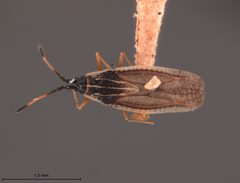
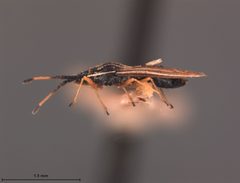
Atheas mimeticus is a of lace bug in the Tingidae, first described by Heidemann in 1909. The species is distributed across much of North America, with records from numerous U.S. states and Canadian provinces. Like other lace bugs, it belongs to the true order Hemiptera and is characterized by the distinctive reticulated, lace-like patterning on its wings and body.

Pronunciation
How to pronounce Atheas mimeticus: //ˈæ.θiː.əs mɪˈmɛtɪkəs//
These audio files are automatically generated. While they are not always 100% accurate, they are a good starting point.
Identification
Atheas mimeticus can be distinguished from other lace bugs by its specific wing venation patterns and body proportions, though detailed diagnostic features require examination. The Atheas is separated from related tingid genera by characteristics of the pronotum and areolae structure. Accurate identification to level typically requires reference to original descriptions and comparison with .
Images
Distribution
North America, with records from Alabama, Alaska, Arizona, Arkansas, California, Colorado, Connecticut, Delaware, Florida, Georgia, Idaho, Illinois, Indiana, Iowa, Kansas, Kentucky, Louisiana, Maine, Massachusetts, Michigan, Minnesota, Montana, Maryland, Mississippi, Missouri, North Carolina, North Dakota, Nebraska, Nevada, New Hampshire, New Jersey, New Mexico, New York, Ohio, Oklahoma, Oregon, Pennsylvania, Rhode Island, South Carolina, South Dakota, Tennessee, and Texas.
More Details
Taxonomic Authority
The was described by O. Heidemann in 1909, making it one of the earlier described members of the Atheas.
Data Limitations
This is poorly represented in public biodiversity databases, with only one observation recorded in iNaturalist as of the knowledge cutoff. Published biological and ecological information appears to be minimal in readily accessible sources.