
Minitingis
Barber, 1954
Species Guides
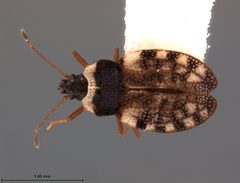
1Minitingis is a of lace bugs (Tingidae) comprising two described : M. minusculus (Barbados, 1954) and M. elsae (West Indies, 1968). Originally synonymized with Zetekella by Drake & Ruhoff (1960), it was revalidated by Froeschner (1968) based on distinct morphological characters and zoogeographical separation. The genus is restricted to the West Indies, contrasting with Zetekella's Neotropical mainland distribution (Panama, Brazil, Ecuador). Both species are known only from brachypterous forms.


Pronunciation
How to pronounce Minitingis: //ˌmɪnɪˈtɪŋɡɪs//
These audio files are automatically generated. While they are not always 100% accurate, they are a good starting point.
Identification
Diagnostic characters separating Minitingis from Zetekella include: seven cephalic spines with a short, obliquely elevated occipital pair; rostrum reaching the second abdominal segment; presence of an abdominal groove; and acute paranotal processes (though these may vary). M. elsae is distinguished by a costal area with alternate conspicuous black and white quadrate marks and four rows of areolae; M. minusculus lacks these marks and has two rows of areolae.
Images
Habitat
Collected in Berlese traps; specific microhabitat requirements unknown.
Distribution
West Indies: Barbados (M. minusculus); broader West Indies distribution (M. elsae).
Behavior
Both are known only from brachypterous (short-winged) forms; no forms have been recorded.
Similar Taxa
- ZetekellaMorphologically similar and historically synonymized with Minitingis. Distinguished by mainland Neotropical distribution (Panama, Brazil, Ecuador), different cephalic spine arrangement, rostrum length, paranotal projections, and absence of abdominal groove.