
Polymerus unifasciatus
(Fabricius, 1794)
Polymerus unifasciatus/lammesi complex
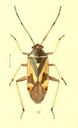
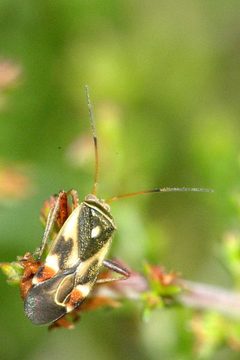
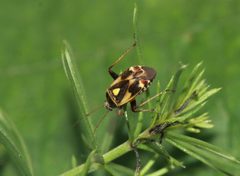
Polymerus unifasciatus is a plant bug in the Miridae, first described by Fabricius in 1794. It is widely distributed across the Holarctic region, with records from Europe, Northern Asia, North America, and Southern Asia. The is part of a with Polymerus lammesi, and the two are often difficult to distinguish in the field.
Pronunciation
How to pronounce Polymerus unifasciatus: //pəˈlɪmərəs ˌjuːniːfæsiˈeɪtəs//
These audio files are automatically generated. While they are not always 100% accurate, they are a good starting point.
Identification
Closely resembles Polymerus lammesi, forming a where reliable separation often requires detailed examination of genitalic structures. The specific epithet 'unifasciatus' suggests a single banded pattern, though diagnostic external features distinguishing it from P. lammesi are not well documented in available sources.
Images
Distribution
Europe; Northern Asia (excluding China); North America; Southern Asia. Specific regional records include: Britain, Central Europe, Corsica, Denmark, Finland, Germany, Italy, Macedonia, Sweden, Turkey, Asiatic USSR, Russia (Sakhalin Island, Kurile Islands, Siberia, Tuva), and China.
Similar Taxa
- Polymerus lammesiForms a with P. unifasciatus; the two are frequently confused and may require genitalic examination for reliable identification. The complex is sometimes treated as a single taxonomic unit in field contexts.