
Fulvius subnitens
Poppius, 1909
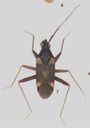
Fulvius subnitens is a of plant bug in the Miridae, described by Poppius in 1909. The species has been recorded from a remarkably wide geographic range spanning tropical Africa, Southeast Asia, the western Pacific islands, and has been introduced to Europe (Belgium). This broad distribution pattern suggests either high capability, human-mediated transport, or possible cryptic . Like other members of the Fulvius, it belongs to the diverse and ecologically significant plant bug family Miridae.
Pronunciation
How to pronounce Fulvius subnitens: /ˈfʊl.vi.əs ˈsʌb.nɪ.tɛnz/
These audio files are automatically generated. While they are not always 100% accurate, they are a good starting point.
Images
Distribution
Native or established in: Tanzania (Africa); Seychelles Islands (Indian Ocean); Taiwan, Engano (Southeast Asia); New Guinea, New Britain, Papua New Guinea (western Pacific). Introduced or present in: Belgium (Europe, specifically Flemish Region). The disjunct distribution across tropical Africa, Indian Ocean islands, Southeast Asia, Melanesia, and Europe suggests either natural wide , human-mediated transport, or potential taxonomic issues requiring verification.
Human Relevance
Recorded as present in Belgium, indicating potential establishment outside native range; significance as or incidental introduction unknown.
More Details
Taxonomic note
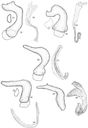
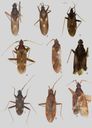
The extremely broad and disjunct geographic distribution (spanning four continents and oceanic islands) is unusual for a single Miridae and warrants critical examination. This pattern may indicate: (1) misidentification of similar species across regions, (2) a genuinely widespread species with strong capabilities, (3) human-mediated transport through trade, or (4) cryptic species currently lumped under F. subnitens. Verification through molecular or morphological revision is recommended.
Data limitations
Only 10 iNaturalist observations exist. No published ecological studies, plant records, or detailed morphological descriptions were located in major databases. The remains poorly known despite its wide reported distribution.