
Microphysidae
Minute Bladder Bugs
Genus Guides
4- Chinaola
- Loricula(minute bladder bugs)
- Mallochiola(small bladder bugs)
- Myrmedobia(minute bladder bugs)
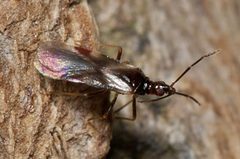
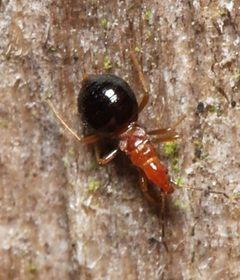
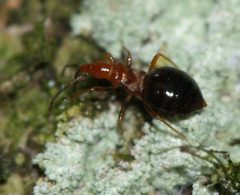
is a minute of predatory true bugs comprising approximately 30 extant across 5 . range from 1.2–3.0 mm in length. The family exhibits pronounced : males are fully winged () while females are short-winged ( or brachypterous). Formerly classified within Anthocoridae, recent molecular studies have repositioned the family, with conflicting placements in Microphysoidea (2022) or as basal Cimiciformes (2023).
Pronunciation
How to pronounce Microphysidae: /ˌmaɪ.kroʊˈfɪ.sɪˌdi/
These audio files are automatically generated. While they are not always 100% accurate, they are a good starting point.
Identification
Distinguished from Anthocoridae (minute pirate bugs) by wing dimorphism pattern and subtle genitalic characters. Separation from other Cimicomorpha requires examination of male genitalia and pretarsal structures. The combination of tiny size, predatory habit, and female brachyptery is diagnostic for the family.
Images
Habitat
Cryptic habits in association with soil surface, leaf litter, or moss layers. Specific microhabitat requirements remain poorly documented due to limited study.
Distribution
Primarily Palaearctic distribution. Documented from Europe (Denmark, Norway, Sweden), Russia (Siberia, Russian Far East), and China (Xinjiang). Distribution records remain sparse due to undercollecting and small size.
Diet
Active of minute arthropods. Documented prey includes mites, springtails (Collembola), aphids, and psyllids. Feeding occurs by piercing-sucking typical of Heteroptera.
Behavior
Cryptic habits contribute to underrepresentation in collections. Reduced female wing development suggests limited and potentially localized structure. Predatory foraging on soil surface and in ground vegetation layer.
Ecological Role
of microarthropods in soil and litter . Potential agent of pest mites and small sap-feeding insects.
Human Relevance
No direct economic significance. Potential utility in programs targeting mites and small pests remains unexplored due to limited knowledge.
Similar Taxa
- AnthocoridaeHistorically confused with ; distinguished by less pronounced in wing development and different male genitalic structure.
- JoppeicidaeGrouped with in the proposed clade Microphysoidea based on 2022 molecular ; morphological distinctions subtle.
Misconceptions
Long classified as a or tribe within Anthocoridae; only recently recognized as a distinct based on molecular and morphological evidence.
More Details
Taxonomic Instability
Phylogenetic position remains unresolved. A 2022 molecular study placed with in Microphysoidea, while a 2023 study recovered them as relatively basal within Cimiciformes.
Fossil Record
Extinct documented from Eocene Baltic amber (Tytthophysa) and Campanian Canadian amber (Popovophysa), indicating ancient lineage with Cretaceous origins.