
Primicimex cavernis
Barber, 1941
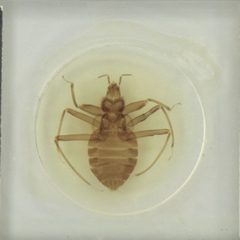
Primicimex cavernis is a primitive bat bug in the Cimicidae, described by Barber in 1941. It is one of only two in the Primiciminae, alongside Bucimex chilensis. The species is notable for being the largest and most morphologically primitive member of Cimicidae. Despite its , the Mexican free-tailed bat (Tadarida brasiliensis), being one of the most abundant and widespread vertebrates in the Americas, P. cavernis is exceptionally rare with only a handful of confirmed localities.
Pronunciation
How to pronounce Primicimex cavernis: //praɪˈmɪsɪmɛks kæˈvɛrnɪs//
These audio files are automatically generated. While they are not always 100% accurate, they are a good starting point.
Identification
P. cavernis can be distinguished from other Cimicidae by its large size and primitive morphological features. It shares a unique tarsal structure with Bucimex chilensis that allows clinging to pelage, a trait not found in other cimicid . The lacks the reduced wings and other derived features seen in more advanced Cimicidae such as Cimex.
Images
Habitat
Limestone caves inhabited by bat colonies. Confirmed localities include Ney Cave in Medina County, Texas, USA, and a cave near Chocoyos, Chimaltenango, Guatemala.
Distribution
Diet
Obligate ; feeds exclusively on blood.
Host Associations
- Tadarida brasiliensis - primary Mexican free-tailed bat; one of the most abundant and widespread vertebrates in the Americas
Life Cycle
Development through instar stages requires blood meals. Both sexes feed on blood; females require blood meals for production and males for sperm production.
Behavior
Possesses a specialized tarsal structure that enables clinging to pelage, facilitating to new areas despite low host . This is shared with Bucimex chilensis and represents a unique dispersal mechanism within Cimicidae.
Ecological Role
of bats; part of the guild of blood-feeding arthropods associated with cave-dwelling bat colonies.
Similar Taxa
- Bucimex chilensisOnly other in Primiciminae; shares primitive and unique tarsal clinging
- Cimex lectulariusMore derived cimicid with reduced wings and different associations; lacks the specialized tarsal structure for pelage clinging
More Details
Rarity and conservation status
Despite intensive survey effort, P. cavernis has been found at only a small fraction of sites where its abundant occurs. In Texas, 87% of eight surveyed sites were negative for the . This pattern reflects genuine rarity rather than insufficient sampling effort. Currently, live are confirmed from only two caves worldwide.
Phylogenetic significance
Molecular phylogenetic analyses using COI and other genomic regions place P. cavernis as sister to B. chilensis, confirming the monophyly of Primiciminae and its position as the most basal lineage within Cimicidae.
Sources and further reading
- BugGuide
- GBIF taxonomy match
- iNaturalist taxon
- NCBI Taxonomy
- Catalogue of Life
- Primicimex cavernis Barber 1941 (Heteroptera: Cimicidae): A rare parasite on a very abundant host
- The Klingon batbugs: Morphological adaptations in the primitive bat bugs, Bucimex chilensis and Primicimex cavernis, including updated phylogeny of Cimicidae