
Primicimex
Barber, 1941
Species Guides
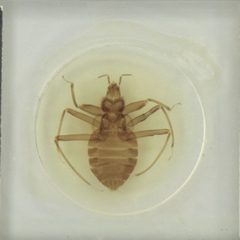
1Primicimex is a of ectoparasitic bed bugs ( Cimicidae) containing a single , Primicimex cavernis. It represents the largest and most morphologically primitive member of the family Cimicidae. The genus belongs to the Primicimicinae, which contains only one other species, Bucimex chilensis. Both species share unique tarsal adaptations for clinging to pelage.
Pronunciation
How to pronounce Primicimex: //ˌprɪmɪˈsɪmɛks//
These audio files are automatically generated. While they are not always 100% accurate, they are a good starting point.
Identification
Primicimex can be distinguished from all other cimicid except Bucimex by the presence of claws and a row of erect, peg-like spines on the —structures used to cling to bat pelage. As the largest cimicid genus, its single exceeds other members in body size. Unlike more derived cimicids, females lack a specialized spermalege (paragenital organ) at the site.
Images
Habitat
Limestone caves used as bat roosts, specifically seasonal nursery colonies. Known sites occur in semiarid savannah grassland with oak, mesquite, and grasses. The hide in crevices within these caves.
Distribution
Recorded from five cave sites total: Ney Cave in Medina County, Texas (type locality), and four additional caves in Guatemala, Mexico, and the southern United States. Currently, live are confirmed from only one cave in the United States and one in Mexico.
Seasonality
Active during bat nursery season when are present; young bats born primarily in June and remain until approximately 40 days of age. survive extended periods without feeding when bats are absent at over-wintering sites.
Diet
Obligate ; feeds exclusively on blood.
Host Associations
- Tadarida brasiliensis - primary Mexican free-tailed bat
- Mormoops megalophylla - secondary Ghost-faced bat; shares roost but less frequently parasitized
Life Cycle
Development through instars requires blood meals. Both sexes feed on blood, and production in females and sperm production in males are contingent on feeding. can survive without feeding for extended periods—up to 1.5 years has been documented in related cimicids.
Behavior
Uses modified tarsal claws and peg-like spines to actively cling to bat pelage, an that facilitates despite low . Hides in cave crevices when hosts are absent. Performs , with males injecting sperm through the female body wall.
Ecological Role
specializing on colonial bats; component of cave-dwelling associated with large bat .
Similar Taxa
- BucimexOnly other in Primicimicinae; shares unique tarsal claw and spine structures for pelage-clinging, lack of female spermalege, and primitive morphological features
- CimexMore derived cimicid ; differs in smaller size, lack of tarsal spines and claws for pelage-clinging, and presence of spermalege in females
More Details
Conservation status
Extremely rare with only 14 literature records from six sites worldwide. Despite the abundance of its primary (Tadarida brasiliensis is one of the most common vertebrates in the Americas), P. cavernis exhibits marked rarity—87% of surveyed Texas sites were negative for the . This pattern reflects genuine rarity rather than insufficient sampling effort.
Evolutionary significance
As the most primitive extant cimicid, Primicimex retains ancestral traits including the lack of a female spermalege, a structure present in all other cimicids. This makes it important for understanding the evolution of and reproductive in the .
Sources and further reading
- BugGuide
- Wikipedia
- GBIF taxonomy match
- iNaturalist taxon
- NCBI Taxonomy
- Catalogue of Life
- Primicimex cavernis Barber 1941 (Heteroptera: Cimicidae): A rare parasite on a very abundant host
- The Klingon batbugs: Morphological adaptations in the primitive bat bugs, Bucimex chilensis and Primicimex cavernis, including updated phylogeny of Cimicidae