
Beameria
Davis, 1934
Aridland Cicadas
Species Guides
2- Beameria venosa(Aridland Cicada)
- Beameria wheeleri
Beameria is a of small cicadas in the Cicadidae, comprising at least three described . Members are among the smallest cicadas in North America, with body lengths around 16 mm. The genus is associated with prairie and has been documented producing high-frequency calling songs. Beameria was established by Davis in 1934.
Pronunciation
How to pronounce Beameria: /ˈbiːmɛriə/
These audio files are automatically generated. While they are not always 100% accurate, they are a good starting point.
Identification
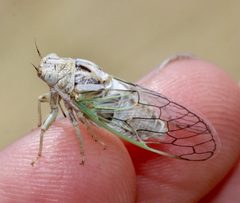
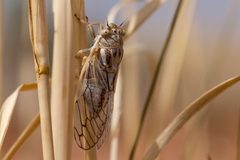
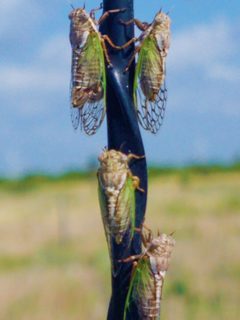
Beameria can be distinguished from other North American cicadas by their notably small body size (approximately 16 mm), significantly smaller than most . The genus is further characterized by association with open prairie rather than wooded environments. Beameria venosa exhibits green wings with contrasting body coloration.
Images
Habitat
Prairie , particularly loess hilltop prairies and sand hill prairies. Associated with open, treeless grassland environments.
Distribution
North American Great Plains region, documented from Nebraska and Colorado south to Texas and New Mexico. Records exist from sand hill prairies south and west of Peoria, Illinois.
Behavior
At least one , Beameria venosa, produces a continuous train of sound pulses at very high frequency. The calling song is audible to humans but may be inaudible to some such as birds and lizards.
Human Relevance
Beameria venosa is listed as "vulnerable" in Missouri due to restricted occurrence of its prairie . The has been documented in conservation checklists.
Similar Taxa
- CicadettaBoth contain small found in prairie ; however, Beameria species are distinguished by their extremely small size (around 16 mm) and high-frequency calling song characteristics.
- Fulgoroid planthoppersDue to small size, Beameria may be mistaken for planthoppers; however, they possess the distinctive calling song and wing venation typical of cicadas.