
Teucholabis
Osten Sacken, 1860
Species Guides
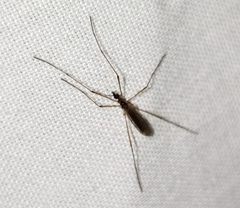
4Teucholabis is a of small crane flies in the Limoniidae, established by Osten Sacken in 1860. The genus contains numerous distributed across multiple subgenera, with stages of at least some species being xylobiont (wood-dwelling). Larvae have been documented living under bark among bast fibers of trees. and ecological details remain poorly documented for most species.
Pronunciation
How to pronounce Teucholabis: /ˌtjuːkoʊˈlæbɪs/
These audio files are automatically generated. While they are not always 100% accurate, they are a good starting point.
Images
Habitat
Larvae are xylobiont, inhabiting the space under bark among bast fibers of trees. Documented trees include Maackia amurensis and Phellodendron amurense, with occasional occurrence under oak, aspen, birch, and maple bark. preferences are not well documented.
Host Associations
- Maackia amurensis - larval (bark/bast fibers)Primary tree for stages
- Phellodendron amurense - larval (bark/bast fibers)Primary tree for stages
- Quercus spp. - larval (bark/bast fibers)Secondary , rarely used
- Populus spp. - larval (bark/bast fibers)Secondary , rarely used
- Betula spp. - larval (bark/bast fibers)Secondary , rarely used
- Acer spp. - larval (bark/bast fibers)Secondary , rarely used
Life Cycle
Larval and pupal stages are xylobiont, developing under bark among bast fibers. Complete details, including deposition site and longevity, are not documented.
Behavior
Larvae exhibit xylobiont , living within the protected microhabitat under tree bark. Specific behaviors are not documented.
More Details
Subgeneric classification
Teucholabis is divided into four subgenera: Euparatropesa, Euteucholabis, Paratropesa, and Teucholabis (sensu stricto). The subgenus Paratropesa was originally described by Schiner in 1866, while Euparatropesa and Euteucholabis were established by Alexander in 1947.