
Gonomyia
Meigen, 1818
Species Guides
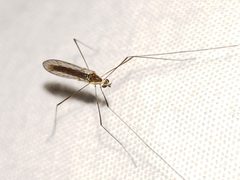
5Gonomyia is a of crane flies in the Limoniidae, established by Meigen in 1818. The genus contains numerous organized into multiple subgenera, including Gonomyia, Gonomyina, Idiocerodes, Leiponeura, Megalipophleps, Neolipophleps, Paralipophleps, Prolipophleps, and Teuchogonomyia. Fossil evidence from Cretaceous amber deposits in Spain and Myanmar indicates the genus originated by at least the Upper Albian, approximately 100 million years ago. spans multiple continents with modern records from Europe, Asia, and the Americas.
Pronunciation
How to pronounce Gonomyia: //ɡəˈnɒmiə//
These audio files are automatically generated. While they are not always 100% accurate, they are a good starting point.
Identification
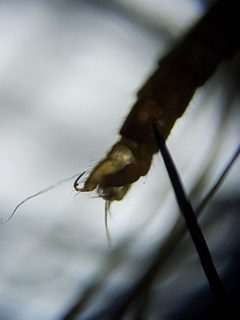
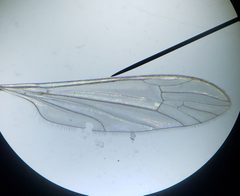
Identification to level requires examination of male terminalia, which are frequently illustrated in taxonomic revisions. Subgenera are distinguished by combinations of antennal segmentation, wing venation patterns, and genitalia . For example, the fossil subgenus Iberiana has 10-segmented while Cretagonomyia has 13-segmented antennae.
Images
Habitat
Larval has been documented for at least one : Gonomyia (Leiponeura) pleuralis larvae inhabit wet moss in mountain streams and seepage areas. Cretaceous fossil species are preserved in amber representing ancient forest .
Distribution
Modern recorded from Europe (including Denmark, Norway, Sweden, Bulgaria, Czech Republic, Italy, Slovakia, Switzerland), Asia (Myanmar), and the Americas. Fossil species known from Upper Albian Spanish amber (Peñacerrada I, northern Spain) and Lowermost Cenomanian Kachin amber (Hukawng Valley, Myanmar).
Life Cycle
For Gonomyia (Leiponeura) pleuralis: larval development occurs in wet moss; takes place within the moss substrate; emerge directly from pupal cases without leaving the aquatic or semi-aquatic . Generalization to other is unsupported.
Behavior
has been observed in Gonomyia (Leiponeura) pleuralis, where adults emerge from pupal cases within wet moss without leaving the larval . Broader behavioral patterns for the remain undocumented.
Similar Taxa
- Other Limoniidae generaGonomyia is distinguished from related limoniid by specific combinations of wing venation, antennal structure, and male genitalia ; precise diagnostic features vary by subgenus
More Details
Cretaceous fossil record
Two new subgenera and were described from Cretaceous amber in 2022: Gonomyia (Iberiana) penalveri from Spanish amber (Upper Albian) and Gonomyia (Cretagonomyia) burmitica from Kachin amber (Lowermost Cenomanian). These represent the oldest confirmed records of the and provide evidence for its early evolutionary diversification.
Taxonomic complexity
The contains over 60 described distributed across nine recognized subgenera, with ongoing taxonomic revisions adding new species and clarifying boundaries between closely related .
Sources and further reading
- BugGuide
- Wikipedia
- GBIF taxonomy match
- iNaturalist taxon
- NCBI Taxonomy
- Catalogue of Life
- <i>Gonomyia (Gonomyia) lucidula</i> de Meijere and allies (Diptera: Limoniidae)
- Notes on the Biology and Immature Stages of Gonomyia (Leiponeura) pleuralis (Will.): Tipulidae, Diptera
- Early stage of evolution of Gonomyia (Diptera: Limoniidae), new significant discoveries in the Cretaceous Iberian and Kachin amber.