
Seioptera vibrans
(Linnaeus, 1758)
Dark-tipped Wingwaver
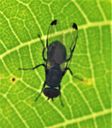
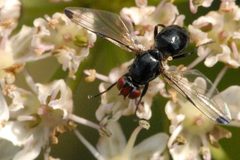
Seioptera vibrans is a small ulidiid fly, 5–6 mm in length, recognized by its habit of constantly waving its wings while at rest. are active from May to September in vegetated and feed on flower pollen and small insects including aphids. Larvae develop in leaf litter where they contribute to decomposition.
Pronunciation
How to pronounce Seioptera vibrans: /ˌsiːɔˈpɛtərə ˈvʌɪbrænz/
These audio files are automatically generated. While they are not always 100% accurate, they are a good starting point.
Identification
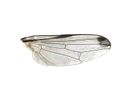
Distinguished from similar ulidiids by the combination of dark-tipped wings and the distinctive wing-waving when perched. The red and furrowed facial structure provide additional diagnostic characters. Wing pattern alone may overlap with some ; behavioral observation strongly supports identification.
Images
Appearance
Body shiny black to blue, measuring 5–6 mm. with red and furrowed . Wings transparent with dark spots on both wings.
Habitat
Associated with trees, bushes, and hedgerows. Larval is leaf litter and decomposing plant material.
Distribution
Recorded from Belgium (including Brussels-Capital, Flemish, and Walloon regions) and Denmark. Wider European distribution likely but not confirmed in provided sources.
Seasonality
active from May to September.
Diet
feed on flower pollen and small insects, specifically including aphids. Larval feeding habits in decomposing plant litter inferred from description; specific diet not documented.
Life Cycle
Larvae develop in leaf litter, contributing to decomposition of plant material. emerge and are active during summer months.
Behavior
Upon landing, constantly wave their wings—a diagnostic and eponymous . Adults fly near vegetation including trees, bushes, and hedges.
Ecological Role
may contribute to pollination through pollen feeding. Larvae participate in decomposition of plant litter. Adults prey on small insects including aphids, potentially providing minor .
Human Relevance
No documented economic or medical significance. Observations suggest ecological role in decomposition and possible incidental pollination.
Similar Taxa
- Other Seioptera speciesMay share similar wing patterns; distinguished by combination of red , furrowed , and wing-waving
- Other UlidiidaePicture-winged flies with patterned wings; S. vibrans distinguished by specific dark wing spots and behavioral traits
More Details
Etymology
Specific epithet 'vibrans' refers to the characteristic wing-waving .