
Zonosemata electa
(Say, 1830)
Pepper Maggot
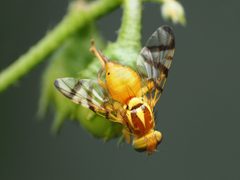
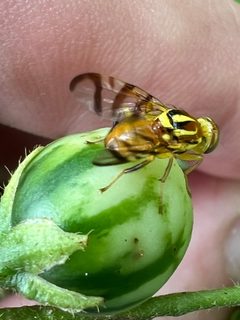
Zonosemata electa, commonly known as the pepper maggot, is a tephritid fruit fly native to North America. The is an agricultural pest whose larvae develop inside peppers and related crops. are small flies with patterned wings characteristic of the Tephritidae. The species was first described by Thomas Say in 1830 under the basionym Trypeta electa.
Pronunciation
How to pronounce Zonosemata electa: /ˌzoʊnoʊˈsiːmətə ɪˈlɛktə/
These audio files are automatically generated. While they are not always 100% accurate, they are a good starting point.
Images
Distribution
North America.
Host Associations
- Capsicum - larval developmentlarvae develop inside pepper fruits
Human Relevance
Agricultural pest of peppers (Capsicum spp.). Larvae tunnel through fruit flesh, rendering produce unmarketable. Damage is concentrated in the eastern United States and Canada where commercial pepper production occurs.
Similar Taxa
- Zonosemata vittigeracongeneric with overlapping North American range; wing pattern differences distinguish
More Details
Taxonomic history
Originally described as Trypeta electa by Thomas Say in 1830, later transferred to Zonosemata. The genus Zonosemata contains seven total: six in North America and one in South America.