
Xanthaciura
Hendel, 1914
fruit flies
Species Guides
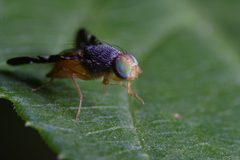
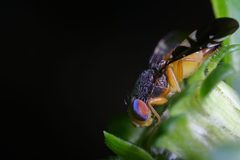
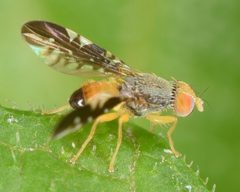
2Xanthaciura is a of tephritid fruit flies (Diptera: Tephritidae) established by Hendel in 1914. It comprises 17 described distributed in the Neotropical region, with eight species recorded from Brazil. The genus belongs to the Tephritinae, a group whose members are typically associated with Asteraceae flowers for oviposition and larval development. Xanthaciura chrysura has been documented visiting flowers of Aristolochia esperanzae (Aristolochiaceae), representing the first record of the genus associated with a plant other than Asteraceae.
Pronunciation
How to pronounce Xanthaciura: //zænˌθæsjʊˈrɑː//
These audio files are automatically generated. While they are not always 100% accurate, they are a good starting point.
Images
Habitat
Neotropical environments; recorded from flowers of Aristolochia esperanzae at a private natural heritage reserve in Campo Grande, Mato Grosso do Sul, Brazil. Specific microhabitat preferences for the remain poorly documented.
Distribution
Neotropical region; eight valid recorded from Brazil. The occurs across tropical and subtropical areas of the Americas.
Host Associations
- Aristolochia esperanzae - floral visitationFirst record of associated with Aristolochiaceae; two females of X. chrysura collected from flowers, bodies covered with pollen
- Asteraceae - typical for Tephritinae members typically associated with Asteraceae; females oviposit in capitula, stems, and buds where larvae develop
Life Cycle
Females deposit in flowers; larvae feed and develop in capitula, stems, and leaves of plants. Specific details for most Xanthaciura are undocumented.
Behavior
Floral visitation observed; fly bodies become covered with pollen aggregated on setae and setulae during flower visits.
Ecological Role
Potential of Aristolochia esperanzae based on pollen transport observed on visiting individuals. Larval stages likely function as herbivores within plant tissues.
Similar Taxa
- Other Tephritinae genera members share association with Asteraceae flowers and similar body plans; -level identification requires examination of specific morphological characters not detailed in available sources
More Details
Taxonomic composition
Seventeen described: X. aczeli, X. biocellata, X. bipuncta, X. chrysura, X. connexionis, X. excelsa, X. flavicauda, X. insecta, X. major, X. mallochi, X. phoenicura, X. quadrisetosa, X. speciosa, X. stonei, X. tetraspina, X. thetis, and X. unipuncta.
Research significance
The association of X. chrysura with Aristolochiaceae represents a departure from the typical Asteraceae-specialized of Tephritinae, suggesting broader range or flexibility than previously recognized for the .