
Tomoplagia
Coquillett, 1910
Species Guides
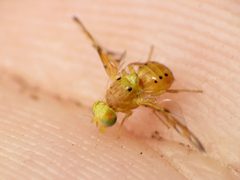
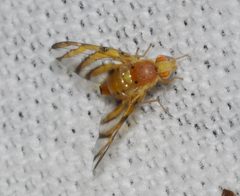
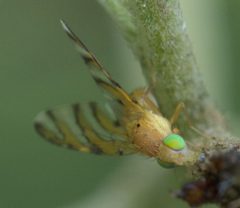
2Tomoplagia is a of tephritid fruit flies (Diptera: Tephritidae) comprising approximately 60 described . The genus is primarily Neotropical in distribution, with species recorded from Brazil and other South American regions. Larvae develop within plant tissues of Asteraceae, with documented associations including flower and stem galls on members of the tribe Vernonieae. specialization varies among species, ranging from monophagy to oligophagy on related host plants.
Pronunciation
How to pronounce Tomoplagia: //toʊ.moʊˈpleɪ.d͡ʒi.ə//
These audio files are automatically generated. While they are not always 100% accurate, they are a good starting point.
Identification
-level identification in Tomoplagia requires examination of wing pattern, body coloration, and male genitalia. The can be distinguished from other Tephritidae by combinations of wing markings, body shape, and chaetotaxy, though specific diagnostic features for the genus as a whole are not well-documented in the provided sources.
Images
Habitat
Associated with rupestrian montane grasslands (campos rupestres) and other supporting Asteraceae plants. have been documented in the Espinhaço Mountain Range of Brazil and in Rio Grande do Sul state.
Distribution
Neotropical; primarily recorded from Brazil, with distributed across multiple Brazilian states including Minas Gerais and Rio Grande do Sul.
Host Associations
- Vernonia polyanthes - larval Flower inhabitant; recorded for multiple Tomoplagia
- Vernonia scorpioides - larval Flower inhabitant
- Lychnophora pinaster - larval Flower inhabitant
- Vernonanthura tweediana - larval ; gall inducerStem gall for T. rudolphi; new host record from Rio Grande do Sul
Life Cycle
Larvae develop within plant tissues of Asteraceae —either within flower or inducing stem galls. occurs within these plant structures. emerge to mate and oviposit on host plants.
Behavior
Females of at least some oligophagous show low philopatry, using various host species indiscriminately within their distribution range. Host plant use appears to be a plastic character that can shift temporally and spatially among phylogenetically related and chemically similar plants.
Ecological Role
Specialized herbivores on Asteraceae; gall-forming modify plant growth patterns. genetic structure is low across local and regional , suggesting among host-associated populations.
Similar Taxa
- Other Tephritidae genera associated with AsteraceaeSimilar plant associations and larval habits; distinguished by wing patterns, body , and male genitalia
More Details
Host Specialization Patterns
Among studied , T. grandis is strictly monophagous, while T. incompleta and T. bicolor are oligophagous on related Vernoniinae . This variation in host breadth exists within a single .
Genetic Structure
Contrary to expectations for specialized herbivores, studied Tomoplagia show no clear -associated genetic differentiation. Genetic variation presents a mosaic pattern across hosts and localities rather than strict host-race formation.
Sources and further reading
- BugGuide
- Wikipedia
- GBIF taxonomy match
- iNaturalist taxon
- NCBI Taxonomy
- Catalogue of Life
- Host specialization, genetic variability, and differentiation in three species of Tomoplagia from Brazilian rupestrian grasslands
- Testing the trend towards specialization in herbivore–host plant associations using a molecular phylogeny of Tomoplagia (Diptera: Tephritidae)
- New distribution record, host plant and notes on natural history of Tomoplagia rudolphi (Lutz & Lima, 1918) (Diptera: Tephritidae)