
Piophila
Fallén, 1810
cheese flies, wine flies
Species Guides
1- Piophila casei(cheese skipper)
Piophila is a of small dipteran flies in the Piophilidae, comprising two : Piophila casei (the cheese fly or ham skipper) and Piophila megastigmata. Both species are carrion feeders with forensic importance, and P. casei is a significant pest of cured meat and cheese products. The genus occurs in the Palearctic and has been introduced to other regions.
Pronunciation
How to pronounce Piophila: //paɪˈɒfɪlə//
These audio files are automatically generated. While they are not always 100% accurate, they are a good starting point.
Identification
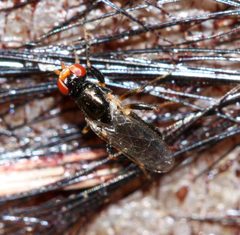
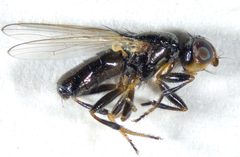
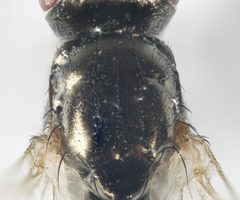
Small dark flies with unmarked wings. Setulae on the are confined to three distinct rows.
Images
Habitat
Natural and periurban environments with carrion; also occurs in anthropogenic settings including ham production facilities and cheese storage areas.
Distribution
Palearctic region (native); recorded from Denmark, Norway, Sweden, and the United States (Vermont). Piophila megastigmata previously known only from South Africa, now recorded from central Spain as first Palaearctic occurrence.
Diet
Carrion and decaying organic matter; larvae feed on high-protein substrates including carcasses, cured ham, and cheese.
Life Cycle
Development strongly influenced by temperature and food substrate. Minimum development threshold approximately 9.91°C. Accumulated degree days (oviposition to ) range from 209–221 depending on temperature.
Behavior
Oviposition induced by bacterial presence, particularly Proteus vulgaris. Larvae are to gastric juices.
Ecological Role
Forensic indicator for estimating time since death; participates in carrion .
Human Relevance
P. casei is a major pest of cured meat and cheese products, causing direct damage and vectoring bacteria including Clostridium botulinum. Larval ingestion can cause myiasis in humans. Used in to determine postmortem interval.
Sources and further reading
- BugGuide
- Wikipedia
- GBIF taxonomy match
- iNaturalist taxon
- NCBI Taxonomy
- Catalogue of Life
- Factors affecting the bionomics of Piophila casei (L.)
- Cheese (or Ham) Skipper, Piophila casei (Linnaeus) (Insecta: Diptera: Piophilidae)
- New piophilid in town: the first Palaearctic record of Piophila megastigmata and its coexistence with Piophila casei in central Spain
- Effect of Temperature on Skipper Fly Piophila casei (Insect: Diptera) Reared on Ham
- The Biology of Pachycrepoideus Dubius Ashmead (Hymenoptera), a Pteromalid Parasite of Piophila Casei Linne
- MICROORGANISMS AS INDUCERS OF OVIPOSITION FOR THE CHEESE SKIPPER, PIOPHILA CASEI (L) DIPTERA
- Evaluation of Pachycrepoideus vindemiae and Muscidifurax raptor (Hymenoptera: Pteromalidae) as biological control agents of Piophila casei (Diptera: Piophilidae) in ham production facilities