
Atylotus calcar
Teskey, 1983
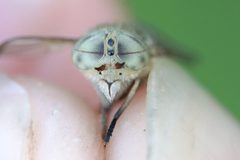
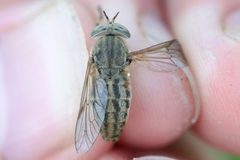
Atylotus calcar is a of horse fly in the Tabanidae, described by Teskey in 1983. As a member of the Atylotus, it belongs to a group of medium to large-sized biting flies commonly known as horse flies or deer flies. The species is part of the tribe Tabanini within the Tabaninae. Very few observations of this species have been recorded, with only six documented observations on iNaturalist.
Pronunciation
How to pronounce Atylotus calcar: /ˈætɨloʊtəs ˈkælkɑr/
These audio files are automatically generated. While they are not always 100% accurate, they are a good starting point.
Identification
Atylotus calcar can be distinguished from other Atylotus by specific morphological characters established in the original description by Teskey (1983). As with other members of the , identification likely relies on details of wing venation, patterns in life or preservation, and genitalic structures. The specific epithet "calcar" (Latin for "spur") may refer to a distinctive spur-like structure on some body part, though this requires verification from the original description.
Images
Distribution
The precise distribution of Atylotus calcar is poorly documented. Based on the limited iNaturalist observations, the has been recorded in North America. The type locality and full range require verification from the original description.
Diet
As with other horse flies in the Tabanidae, females of Atylotus calcar likely require blood meals for development, while males probably feed on nectar and other sugar sources. However, specific associations for this have not been documented.
Ecological Role
Similar Taxa
- Other Atylotus speciesMembers of the Atylotus share general body plan, size range, and wing venation patterns, requiring careful examination of specific morphological characters for definitive identification.
- Tabanus speciesThe largest of horse flies overlaps in size and general appearance with Atylotus, but differs in details of structure, wing venation, and genitalia.
More Details
Taxonomic history
Atylotus calcar was described by Canadian dipterist Harold J. Teskey in 1983. Teskey was a leading authority on Tabanidae, and his descriptions are noted for their and attention to diagnostic characters.
Data deficiency
This is exceptionally poorly known in the literature. The six iNaturalist observations represent the most accessible occurrence data, suggesting it may be genuinely rare, geographically restricted, or undercollected due to resemblance to more common species.
Sources and further reading
- BugGuide
- GBIF taxonomy match
- iNaturalist taxon
- NCBI Taxonomy
- Catalogue of Life
- How a Newly Described Bacteria Species Became a Kimsey | Bug Squad
- “Rare jewel beetles discovered in Mexico by team of scientists!” | Beetles In The Bush
- Megalopygidae | Beetles In The Bush
- A jewel of a beetle | Beetles In The Bush
- Managing landscapes shapes species' experience of the climate | Blog