
Diachlorus
Osten Sacken, 1876
biting horseflies
Species Guides
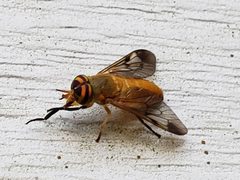
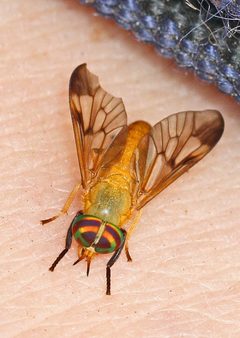
1- Diachlorus ferrugatus(Yellow Fly)
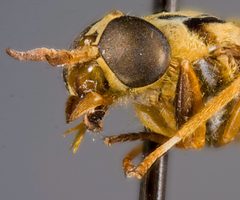
Diachlorus is a of biting horseflies in the Tabanidae, containing 27 neotropical with highest diversity in Brazil. The genus includes the widespread species D. ferrugatus, which ranges from the southeastern United States to Rica. Members are known for their blood-feeding and distinct diel activity patterns.
Pronunciation
How to pronounce Diachlorus: /daɪˈæˌklɔːrəs/
These audio files are automatically generated. While they are not always 100% accurate, they are a good starting point.
Images
Habitat
Neotropical regions including forested and open ; specific microhabitat preferences vary by .
Distribution
Neotropical distribution with greatest in Brazil; 3 in Central America; D. ferrugatus ranges from southeastern United States to Rica.
Seasonality
Peak abundance of D. ferrugatus in northwestern Florida occurs in June.
Diet
are blood-feeders; females seek for blood meals. Anthrone assays indicate fructose feeding occurs in approximately 72% of D. ferrugatus adults.
Behavior
D. ferrugatus exhibits diel -seeking activity with a primary peak at sunset (1945h CST) and a minor secondary peak at midday (1145h). No host-seeking activity occurs in darkness. Mark-recapture studies indicate most individuals are transitory rather than resident.
Human Relevance
Biting pests; D. ferrugatus is known to bite humans and likely other vertebrates.
More Details
Species Count
27 recognized as of recent taxonomic revisions, with Diachlorus tenuimaculatus described in 2020.
Reproductive Status
In D. ferrugatus, 96.9% of -seeking were nulliparous, suggesting most biting activity occurs before first oviposition.