
Goniops chrysocoma
(Osten Sacken, 1875)
Golden-haired Horse Fly
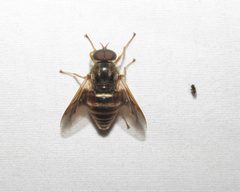
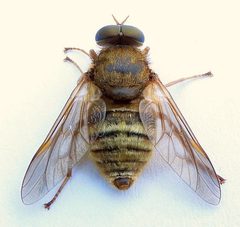
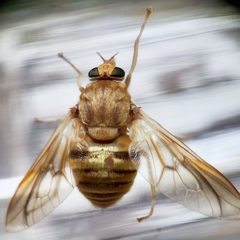
Goniops chrysocoma is the sole in the Goniops, a horse fly in the Tabanidae. It is found in North America, with records from the United States including Vermont. The species is characterized by its distinctive golden-haired appearance, which contributes to its . As a member of the horse fly family, it belongs to a group of blood-feeding flies known for their painful bites and ecological significance as and prey for other animals.
Pronunciation
How to pronounce Goniops chrysocoma: /ˈɡoʊniˌɒps ˌkraɪsoʊˈkoʊmə/
These audio files are automatically generated. While they are not always 100% accurate, they are a good starting point.
Identification
The dense golden-yellow hair covering the and is the primary field mark distinguishing Goniops chrysocoma from other North American horse flies. As the only in its , specimens can be confirmed by the combination of this coloration with generic characteristics of Goniops, which may include specific patterns of ornamentation or wing venation. Examination of genitalia is typically required for definitive species identification in Tabanidae.
Images
Distribution
North America, with confirmed records from the United States including Vermont. The full range likely extends more broadly across eastern and possibly central North America, though specific distribution details are sparse in available sources.
Diet
females are blood-feeders, likely taking blood from mammals including livestock and wildlife. Adult males feed on nectar and other sugary substances. Larval diet is unknown but typical tabanid larvae are predatory in moist soil or aquatic environments.
Life Cycle
Behavior
are and likely strong fliers, as characteristic of horse flies. Females seek blood meals for development and may be persistent in pursuing . Both sexes visit flowers for nectar, contributing to pollination. Specific behavioral studies for this are lacking.
Ecological Role
Females function as blood-feeding of vertebrates, potentially impacting livestock and wildlife through direct blood loss and as of agents. of both sexes serve as when feeding on nectar. Larvae likely function as in soil and aquatic . The serves as prey for birds, , and other .
Human Relevance
Like other horse flies, females may bite humans, causing painful welts. They may be pests of livestock. The distinctive appearance makes this of interest to entomologists studying horse fly diversity, particularly given its status as the sole member of its .
Similar Taxa
- Other Tabanidae (horse flies and deer flies)Similar body plan and , but distinguished by the dense golden characteristic of Goniops chrysocoma. Most other North American horse flies lack this distinctive golden hair covering.
- Chrysops (deer flies)Similar size and , but deer flies typically have patterned wings and spotted , and lack the dense golden body hair of Goniops chrysocoma.
More Details
Taxonomic significance
Goniops chrysocoma is the only in the Goniops, making it taxonomically significant for understanding the diversity and evolutionary relationships within the Pangoniinae of Tabanidae. The genus is placed in the tribe Goniopsini.
Observation records
The has been documented in citizen science platforms with over 400 observations, suggesting it is not rare, though it may be undercollected relative to more economically significant horse fly species.