Silvius quadrivittatus
(Say, 1823)
Silvius quadrivittatus is a of deer fly in the Tabanidae, originally described by Thomas Say in 1823 as Chrysops quadrivittatus. It belongs to the Silvius, a group of relatively small, slender horse flies distinguished from the more common Chrysops by subtle morphological differences. The species is documented from eastern North America, though detailed biological information remains limited in the literature.
Pronunciation
How to pronounce Silvius quadrivittatus: /ˈsɪl.vi.əs ˌkwɒd.rə.vɪˈtæ.təs/
These audio files are automatically generated. While they are not always 100% accurate, they are a good starting point.
Identification
Distinguished from the closely related Chrysops by generally smaller size, more slender build, and less boldly patterned wings. The four-striped pattern referenced in the name may aid separation from , though precise diagnostic features require examination of wing venation and genitalia. Separation from other Silvius species requires detailed morphological study.
Images
Appearance
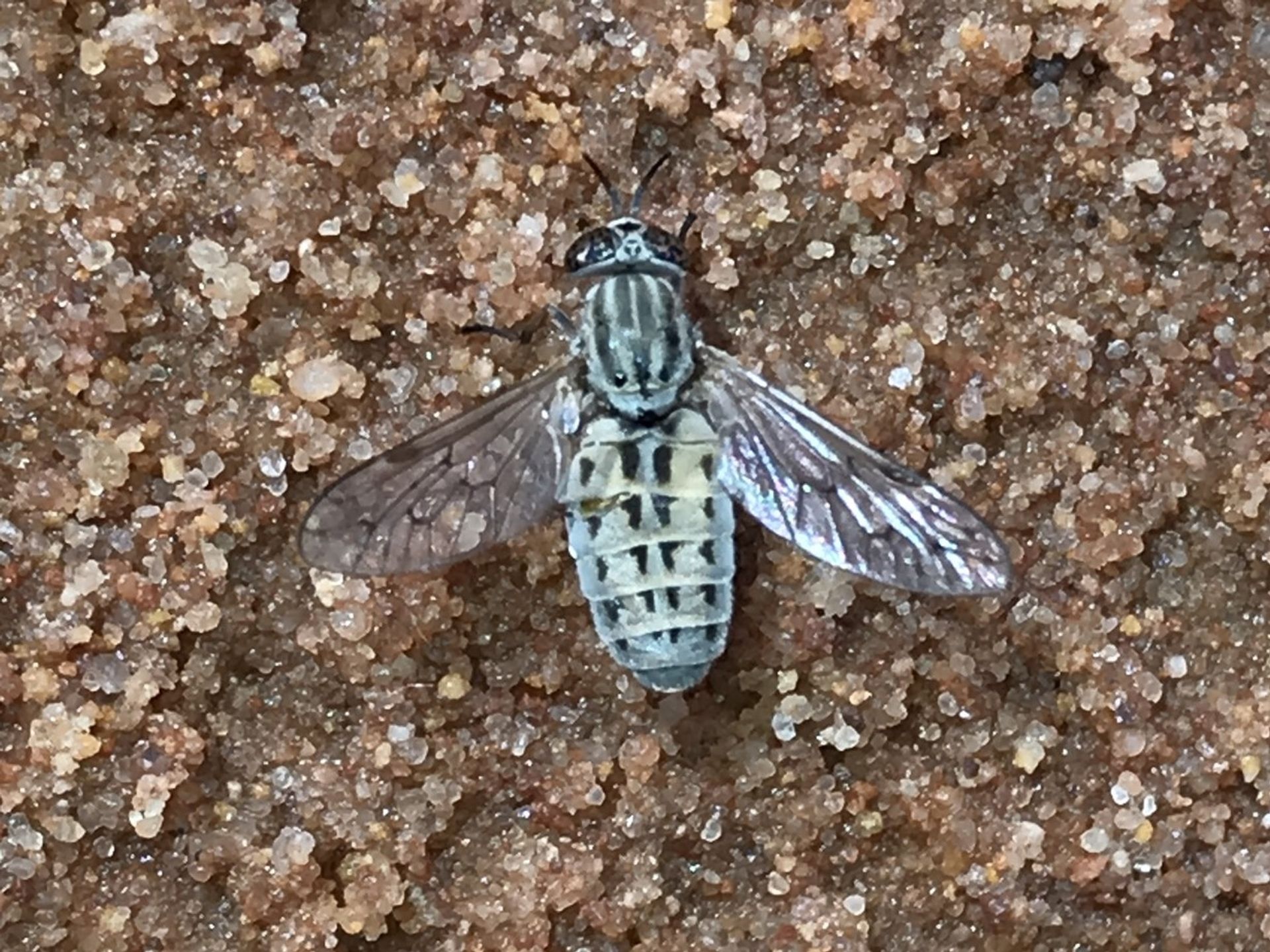
A small to medium-sized tabanid fly with a slender body. As implied by the specific epithet "quadrivittatus" (four-striped), the likely exhibits four distinct longitudinal stripes on the or . Members of Silvius generally have clear or lightly patterned wings and relatively small compared to larger horse flies. in eye structure is present, with males having (contiguous) eyes and females dichoptic (separated) eyes.
Habitat
Associated with wooded or forest-edge environments typical of deer flies, with larval development presumably in moist soils or shallow aquatic margins. Specific microhabitat preferences are undocumented.
Distribution
Eastern North America; documented from the United States with records suggesting a range concentrated in the eastern and central regions. Precise distribution boundaries are poorly defined due to limited collection and identification effort.
Seasonality
activity period is undocumented; related tabanid in temperate regions are generally active during late spring through summer.
Ecological Role
As with other Tabanidae, females are presumed to be facultative blood-feeders on vertebrates, potentially serving as mechanical of . Larvae likely function as in soil or aquatic microhabitats.
Human Relevance
Potential biting pest; specific medical or veterinary significance is undocumented. The is not among the most frequently reported nuisance tabanids.
Similar Taxa
- Chrysops spp.Similar size and general appearance; distinguished by more robust build, bolder wing patterns, and different wing venation
- Silvius pollinosusCongeneric with overlapping range; requires detailed morphological comparison for reliable separation