
Leucozona americana
Curran, 1923
American Whitebelt, American whitebelt fly
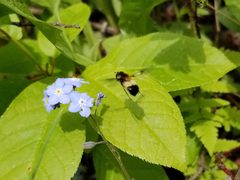
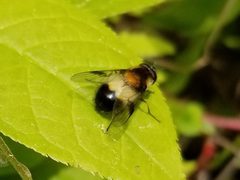
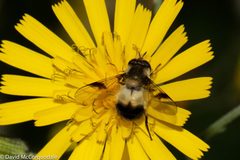
Pronunciation
How to pronounce Leucozona americana: /ˌluːkəˈzoʊnə əˌmɛrɪˈkeɪnə/
These audio files are automatically generated. While they are not always 100% accurate, they are a good starting point.
Identification
As a member of the Leucozona, this likely exhibits the pale abdominal banding characteristic of the group, though specific diagnostic features distinguishing it from are not documented in available sources. The "American whitebelt fly" suggests a pale transverse band on the . Positive identification requires examination of specimens and comparison with related species such as Leucozona lucorum and Leucozona glaucia.
Images
Habitat
are associated with flowering vegetation. Specific preferences for larvae are unknown due to lack of larval records.
Distribution
Northern North America. The has been documented with 52 observations on iNaturalist, indicating a documented but uncommon occurrence across its range.
Diet
feed on nectar and pollen from flowers. Larval diet is unknown.
Life Cycle
Complete with , larva, pupa, and stages. Larval is not known; no larval specimens have been documented.
Behavior
are capable of hovering , remaining nearly motionless in air. They are commonly observed visiting flowers.
Ecological Role
likely contribute to pollination through flower visitation. Ecological role of larvae is unknown.
Similar Taxa
- Leucozona lucorumCongeneric European with similar pale abdominal banding; distinguished by geographic range and subtle morphological differences requiring expert examination.
- Leucozona glauciaAnother congeneric with which it may be confused; separation requires detailed morphological analysis.
More Details
Taxonomic Status
The Catalogue of Life lists this as a synonym, though GBIF and NCBI treat it as accepted. Taxonomic resolution may require further investigation.
Data Deficiency
The is notably data-deficient regarding stages. No larval specimens have been collected or described, representing a significant gap in biological knowledge for this .
Sources and further reading
- BugGuide
- Wikipedia
- GBIF taxonomy match
- iNaturalist taxon
- NCBI Taxonomy
- Catalogue of Life
- Deerly departed: food for flesh-recycling carrion beetles - Margined carrion beetle, Oiceoptoma noveboracense, and American carrion beetle, Necrophila americana — Bug of the Week
- Unwelcome guests in Hawai’i: American cockroach, Periplaneta americana, German cockroach, Blattella germanica, and Western yellowjacket, Vespula pensylvanica — Bug of the Week
- As a Watershed is Urbanized, Damselflies Show Declines
- Silphidae | Beetles In The Bush
- Explorer or Wallflower? Study Shines Light on Cockroach Personalities
- Botanizing at St. Joe State Park | Beetles In The Bush