
Brachypalpus oarus
(Walker, 1849)
eastern catkin
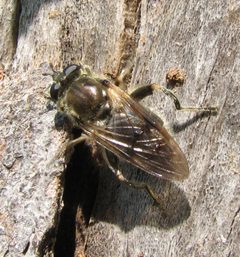
Brachypalpus oarus, commonly known as the eastern catkin, is a Nearctic hoverfly (Syrphidae) described by Walker in 1849. frequent flowers for nectar and pollen, while larvae possess the rat-tailed characteristic of saprophagous syrphids, feeding beneath tree bark.

Pronunciation
How to pronounce Brachypalpus oarus: /ˌbrækɪˈpælpəs ˈoʊərəs/
These audio files are automatically generated. While they are not always 100% accurate, they are a good starting point.
Images
Distribution
Northeastern North America, with in southwestern Canada and the United States. Records include Vermont.
Diet
feed on nectar and pollen from flowers. Larvae feed on decaying sap under tree bark.
Life Cycle
Larvae are of the rat-tailed type, adapted for saprophagy in subcortical environments.
Behavior
hover in , a characteristic of Syrphidae. Has been observed visiting flowers.
Ecological Role
may contribute to pollination through flower visitation. Larval saprophagy contributes to nutrient cycling in decaying wood.
More Details
Nomenclature
Originally described as Xylota oarus Walker, 1849; later transferred to Brachypalpus.