
Tropidia quadrata
(Say, 1824)
Common Thick-leg Fly, Common Thickleg Fly
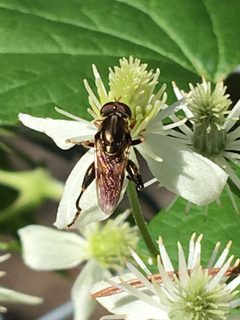
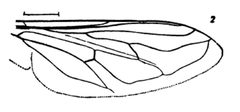
Pronunciation
How to pronounce Tropidia quadrata: //trɔˈpɪdiə kwɒˈdreɪtə//
These audio files are automatically generated. While they are not always 100% accurate, they are a good starting point.
Identification
The common thick-leg fly can be distinguished from other syrphid flies by its notably swollen hind . The aquatic larval separates it from most other hoverfly , which typically have terrestrial or saprophagous larvae. It may be confused with other Tropidia species, but the combination of distribution range and leg aids identification.
Images
Appearance
have characteristically thickened hind , giving the appearance of 'thick legs.' As a member of Syrphidae, the body is generally compact with large typical of hoverflies. Specific coloration and patterning details are not well documented in available sources.
Habitat
are found in association with flowers in open . Larvae inhabit aquatic environments, though specific water body types are not documented.
Distribution
North America: north-central United States and southern Canada. Specific records include Vermont and other US states.
Diet
feed on nectar and pollen from flowers. Larval diet is unknown but likely involves organic matter in aquatic environments.
Life Cycle
Larval stage is aquatic. Details of deposition, , and developmental timing are not documented.
Behavior
have been observed visiting flowers. Like other hoverflies, they are capable of sustained hovering . No other specific are documented.
Ecological Role
likely contribute to pollination through flower visitation. Larval aquatic suggests a role in nutrient cycling in freshwater systems.
Human Relevance
No significant documented interactions. may be observed by naturalists and photographers due to their flower-visiting .
Similar Taxa
- Other Tropidia speciesShare the and general , but T. quadrata is distinguished by its specific distribution and leg structure.
- Other Syrphidae with aquatic larvaeFew hoverflies have aquatic larvae; most Eristalinae larvae are found in decaying organic matter or plant tissues.