
Eurimyia
Bigot, 1883
rat-tail maggot flies, swamp flies
Species Guides
1- Eurimyia stipata(long-nosed swamp fly)
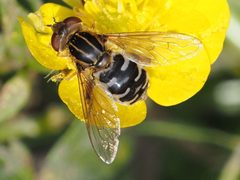
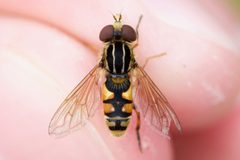
Eurimyia is a of hoverflies ( Syrphidae) containing three described . These flies are commonly known as rat-tail maggot flies due to the distinctive elongated breathing tube of their aquatic larvae. The genus was established by Bigot in 1883 and previously included species now classified under Lejops. are associated with wetland .
Pronunciation
How to pronounce Eurimyia: //ˌjuː.rɪˈmaɪ.i.ə//
These audio files are automatically generated. While they are not always 100% accurate, they are a good starting point.
Identification
can be distinguished from other Eristalini by specific wing venation and facial characteristics, though precise diagnostic features require examination. The was separated from Lejops based on morphological differences in male genitalia and larval breathing siphon structure. -level identification relies on abdominal patterning and facial markings.
Images
Habitat
Wetland environments including marshes, swamps, and shallow standing water where larvae develop. are often found in vegetation near aquatic breeding sites.
Distribution
Recorded from Denmark (DK) and Norway (NO) in Europe; occur more broadly with E. japonica in East Asia.
Life Cycle
Larvae are aquatic and possess an elongated breathing siphon (the 'rat-tail'), allowing them to respire while submerged in shallow, often organic-rich water. This siphon can extend several times the body length. occurs in moist soil or substrate at the water margin.
Ecological Role
Larvae contribute to nutrient cycling in aquatic systems by processing decaying organic matter. may serve as of wetland flora.
Human Relevance
Larvae are medically harmless despite superficial resemblance to parasitic botfly larvae. The 'rat-tail maggot' sometimes causes unnecessary concern.
Similar Taxa
- LejopsFormerly included in this ; separated based on male genitalia and larval siphon . Lejops generally have shorter larval breathing tubes.
- EristalisShares aquatic larval and 'rat-tail' ; distinguished by facial structure and wing venation patterns.
Misconceptions
The 'rat-tail maggot' leads to confusion with parasitic organisms; these larvae are non-parasitic decomposers.
More Details
Taxonomic history
Eurimyia were transferred from Lejops following revisionary work that clarified generic boundaries within Eristalini. The contains three species: E. japonica (East Asia), E. lineata (striped swamp fly), and E. stipata (long-nosed swamp fly).