
Polybiomyia
Shannon, 1925
Species Guides
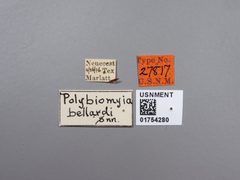
6- Polybiomyia bellardii(Red-legged Wasp Fly)
- Polybiomyia engelhardti(Yellow-cheeked Wasp Fly)
- Polybiomyia macquarti(Short-horned Wasp Fly)
- Polybiomyia sayi(Say's Wasp Fly)
- Polybiomyia schnablei(Rusty Wasp Fly)
- Polybiomyia townsendi(Yellowshield Wasp Fly)
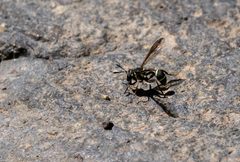
Polybiomyia is a of hoverflies ( Syrphidae) in the tribe Cerioidini, established by Shannon in 1925. Members of this genus are part of the diverse Eristalinae , which includes many - and -mimicking . The genus is documented in entomological collections and has been recorded in citizen science observations, though detailed biological studies remain limited.
Pronunciation
How to pronounce Polybiomyia: //ˌpɒlɪbaɪˈoʊmiə//
These audio files are automatically generated. While they are not always 100% accurate, they are a good starting point.
Identification
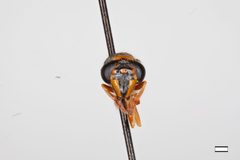
As a member of the Cerioidini tribe, Polybiomyia likely exhibit the slender body form and -like coloration patterns typical of this group. Definitive identification to species level requires examination of male genitalia and other microscopic characters. Separation from related cerioidine such as Ceriana and Monoceromyia depends on subtle differences in wing venation, facial structure, and abdominal patterning.
Images
Distribution
Observations recorded on iNaturalist indicate presence in the Americas, with the occurring in the Neotropical and Nearctic regions. Specific range boundaries for individual within the genus have not been comprehensively documented.
Ecological Role
As hoverflies, in this likely contribute to pollination as and may serve as decomposers in larval stages, consistent with known roles of related Eristalinae, though specific ecological functions for Polybiomyia remain unverified.
Similar Taxa
- CerianaShares the Cerioidini tribe and -mimicking appearance; distinguished by differences in wing venation and abdominal shape
- MonoceromyiaAnother cerioidine with similar slender build; differs in facial and genitalic characters
More Details
Taxonomic Note
The was established by Raymond Corbett Shannon, a prominent dipterist, in 1925. The etymology references Polybius, a Greek historian, combined with the Greek 'myia' (fly), following the classical naming conventions common in Syrphidae.
Research Status
Despite 334 iNaturalist observations, peer-reviewed literature on Polybiomyia and -level remains sparse, indicating a need for focused systematic study.