
Solva pallipes
(Loew, 1863)
Solva pallipes is a of soldier fly in the Xylomyidae, distributed across most of North America. are associated with wooded and are attracted to light. Larvae develop under the bark of various deciduous trees, where they feed on decaying wood and associated microorganisms.

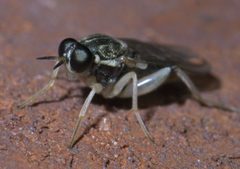
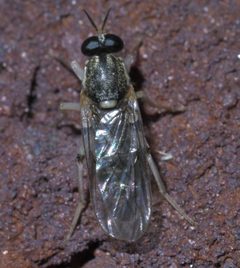
Pronunciation
How to pronounce Solva pallipes: /ˈsɔl.va ˈpæl.ɪ.piːz/
These audio files are automatically generated. While they are not always 100% accurate, they are a good starting point.
Identification
Solva pallipes can be distinguished from other Xylomyidae by its North American distribution and association with deciduous tree bark . Within the Solva, identification to level typically requires examination of genitalic structures and other fine morphological characters. may be recognized by their soldier fly-like habitus with a somewhat flattened body and relatively broad .
Images
Habitat
occur in shady, wooded areas, often observed resting on tree trunks. They have been recorded on Chrysanthemum plants in cultivated settings. Larval is subcortical (beneath bark) in living or recently dead deciduous trees.
Distribution
Documented throughout most of North America, with specific records from the United States including Vermont.
Diet
Larvae feed on decaying wood and associated microorganisms beneath tree bark. feeding habits are not documented.
Host Associations
- Populus deltoides - larval cottonwood
- Populus × canadensis - larval Carolina poplar
- Maclura pomifera - larval Osage orange
- Morus rubra - larval red mulberry
Life Cycle
Development occurs through complete with , larval, pupal, and stages. Larvae inhabit the space beneath bark of trees. Duration of developmental stages and number of per year are not documented.
Behavior
are attracted to artificial light sources. They are typically found in shaded, wooded environments rather than open areas.
Ecological Role
Larvae contribute to wood decomposition and nutrient cycling in forest by processing decaying phloem and cambium tissues under tree bark. Their role in broader is poorly documented.
Human Relevance
Occasionally found in proximity to cultivated plants (Chrysanthemum). Not known to be economically significant as a pest or beneficial . Light attraction may bring to residential areas near wooded .
Similar Taxa
- Other Solva species share similar and larval habits; require genitalic examination for reliable separation
- Xylomyidae of genus XylomyaSimilar soldier fly appearance and bark-associated larvae; differ in specific morphological details of wing venation and body proportions
More Details
Taxonomic note
The Xylomyidae (soldier flies) was historically treated as a of Stratiomyidae but is now recognized as a distinct family within the infraorder Stratiomyomorpha.
Larval biology
The subcortical larval habit places S. pallipes among the relatively few Diptera that specialize in feeding beneath the bark of living or stressed trees, rather than in fully dead wood or soil.
Sources and further reading
- BugGuide
- Wikipedia
- GBIF taxonomy match
- iNaturalist taxon
- NCBI Taxonomy
- Catalogue of Life
- The Day That Dragonflies Sprang to Life | Bug Squad
- Secrets of the "Subnivium": Arthropod Community Thrives Beneath Winter Snowpack
- New Guide Charts Path to Improved IPM for Fly Pests of Cattle
- A step back for species-rich grasslands: why removing them from the Sustainable Farming Initiative matters for our endangered invertebrates - Buglife Blog - Buglife
- Conservation Translocations: It’s Not Just Beavers - Buglife Blog - Buglife
- In Search of Britain’s Endemics - Buglife Blog - Buglife