
Solva
Walker, 1859
wood soldier flies
Species Guides
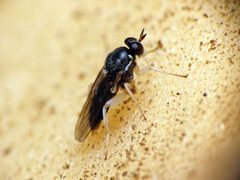
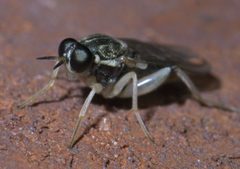
2Solva is a of soldier flies in the Xylomyidae, commonly known as wood soldier flies. These Diptera are characterized by their association with decaying wood . The genus is distributed across northern Europe and North America, with documented records from Denmark, Norway, Sweden, and the northeastern United States including Vermont. Solva are part of the understudied but ecologically significant group of insects that contribute to wood decomposition processes.

Pronunciation
How to pronounce Solva: /ˈsɔl.va/
These audio files are automatically generated. While they are not always 100% accurate, they are a good starting point.
Identification
Solva can be distinguished from other Xylomyidae by features of wing venation and body structure typical of the . Members of Xylomyidae are generally recognized by their soldier fly-like appearance with a somewhat flattened body and distinctive wing characteristics. Specific diagnostic features for Solva require examination of morphological characters that separate it from related genera such as Xylomya and Xylomyia. Accurate species-level identification within the genus requires knowledge and detailed morphological analysis.
Images
Habitat
in this are associated with woodland environments, particularly containing decaying wood. The Xylomyidae is known for larvae that develop in rotting wood, and Solva follows this ecological pattern. Suitable habitat includes forests and wooded areas where dead and decaying timber provides developmental substrate for stages.
Distribution
Documented distribution includes northern Europe (Denmark, Norway, Sweden) and North America (United States, specifically Vermont). The has a transatlantic distribution pattern characteristic of some boreo-temperate Diptera groups. Distribution records are based on documented specimens and observations, though the full range may be incompletely sampled.
Life Cycle
follows the typical pattern for Xylomyidae: larvae develop in decaying wood where they feed on decomposing plant material. Larvae are , contributing to wood decomposition. are presumably short-lived and do not feed extensively, focusing instead on . Specific developmental timing and duration of stages are not well documented for most Solva .
Ecological Role
Larvae function as decomposers in forest , processing decaying wood and facilitating nutrient cycling. As insects, they contribute to the breakdown of dead timber and the return of organic material to soil systems. Their role in wood decomposition places them within the of saproxylic insects that maintain forest health and biodiversity.
Human Relevance
Direct economic or medical importance to humans is minimal. The is not known to be a pest of agriculture, forestry, or public health. Interest in Solva is primarily scientific, related to studies of Diptera diversity, woodland , and saproxylic insect . The group may serve as an indicator of woodland quality and dead wood availability.
Similar Taxa
- XylomyaAnother in Xylomyidae with similar wood-associated and ; separation requires examination of specific wing venation and structural characters
- XylomyiaRelated xylomyid sharing preferences and general appearance; distinguished by morphological details of the , , and wing features
- StratiomyidaeLarger of soldier flies with superficially similar appearance; Xylomyidae including Solva differ in wing venation, larval specificity, and other structural features
More Details
Taxonomic note
The Solva was established by Francis Walker in 1859. It remains a relatively poorly studied group within the Xylomyidae, with limited -level taxonomic revision in recent decades. The Xylomyidae itself is small, containing only a few genera worldwide, and is sometimes grouped with Stratiomyidae in broader classifications.
Research status
Biological and ecological data for Solva are sparse in the primary literature. Most information is derived from general -level accounts of Xylomyidae rather than -specific studies. The 1,256 iNaturalist observations suggest growing citizen science documentation, though verified identifications to level require expert confirmation.