
Adoxomyia
Kertész, 1907
soldier flies
Species Guides
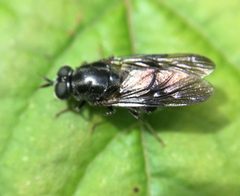
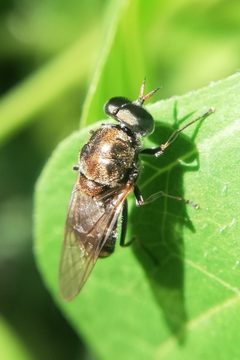
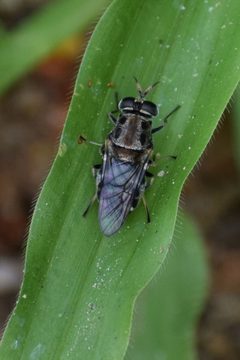
3Adoxomyia is a of soldier flies (Stratiomyidae) comprising at least 30 described . The genus has a broad geographic distribution, with species documented across the Palaearctic, Nearctic, Oriental, and Neotropical regions. Larvae develop in decaying vegetable substrates, particularly rotting roots and stems of plants in desert and arid environments. are often associated with flowers.
Pronunciation
How to pronounce Adoxomyia: /ˌædɒkˈsɒmɪə/
These audio files are automatically generated. While they are not always 100% accurate, they are a good starting point.
Images
Habitat
Desert and arid zone . Larvae inhabit decaying moist vegetable substrates, specifically rotting roots and stems. Documented examples include dune sands with decaying roots of Ferula assa-foetida, rotting papaya stems, and rhizomes of Kaempferia.
Distribution
Palaearctic, Nearctic, Oriental, and Neotropical regions. Specific records include: southern Europe, Transcaucasia, Middle East, Central Asia, China, Caucasus, Eastern Europe, and India. The contains 36 total: 16 Palaearctic, 13 Nearctic, 4 Neotropical.
Seasonality
observed in May for A. cinerascens in Uzbekistan. Larvae collected in April with adults emerging by early May.
Diet
Larvae feed on decayed vegetable substrates: decaying moist roots of withering plants, rotting stems, and rhizomes. Specifically documented in decaying roots of Ferula assa-foetida, rotting papaya stems, and Kaempferia rhizomes.
Host Associations
- Ferula assa-foetida - larval development in decaying rootsKyzylkum desert, Uzbekistan
- Kaempferia sp. - previously recorded larval Zingiberaceae
- Carica papaya - previously recorded larval rotting stems
- Cistanche tubulosa - collection siteflower visitation
- Ferula sp. - collection siteflower visitation
- Vitex agnus-castus - collection siteflower visitation
Life Cycle
Larvae develop in decaying vegetable substrates, found in of up to 30 individuals per plant. Larval stage followed by and . Adult emergence timing documented in spring (May) for at least one .
Behavior
Larvae commonly co-occur with Cyphomyia larvae in similar including damaged cacti, opuntia, and agave. visit flowers for nectar or pollen.
Ecological Role
Decomposer contributing to breakdown of rotting plant material in desert . Larvae process decaying vegetable matter, facilitating nutrient cycling in arid environments.
Similar Taxa
- CyphomyiaLarvae share similar and often co-occur in rotting plant material including papaya, damaged cacti, opuntia, and agave; both are soldier fly with saprophagous larvae
More Details
Taxonomic history
A. portschinskii Pleske has been synonymized with A. dahlii Meigen.
Larval morphology
Larvae distinguished by structure and setae topography; diagnostic characters include structure, , and scutellum spine position in .
Sources and further reading
- BugGuide
- Wikipedia
- GBIF taxonomy match
- iNaturalist taxon
- NCBI Taxonomy
- Catalogue of Life
- New data on Adoxomyia Bezzi from the Caucasus and Eastern Europe (Diptera: Stratiomyidae)
- New data on morphology and biology of soldier flies Adoxomyia cinerascens (Loew, 1873) and A. heminopla (Wiedemann, 1819) (Diptera: Stratiomyidae)