
Leptocera
Olivier, 1813
Species Guides
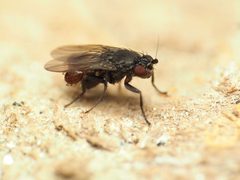
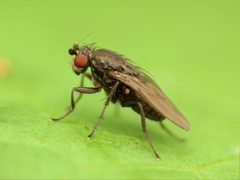
3Leptocera is a of small flies in the Sphaeroceridae (Diptera), established by Olivier in 1813. The genus includes multiple subgenera with divergent ecological specializations: the nominate subgenus Leptocera contains associated with decaying organic matter including sewage systems, while the subgenus Thoracochaeta is restricted to marine supralittoral . Several species have been documented as pests in artificial environments. The genus is distributed across multiple biogeographic regions including the Nearctic, with some species recently introduced to North America.
Pronunciation
How to pronounce Leptocera: /lɛp.toˈkeː.ra/
These audio files are automatically generated. While they are not always 100% accurate, they are a good starting point.
Identification
Members of the subgenus Thoracochaeta can be distinguished from other Leptocera by their association with marine supralittoral zones; the Nearctic Thoracochaeta fauna comprises nine distinguishable by morphological keys. The nominate subgenus Leptocera includes species such as L. caenosa, which has been documented in sewage disposal systems. No specific diagnostic features for the as a whole are provided in available sources.
Images
Habitat
varies by subgenus: the nominate subgenus Leptocera is associated with decaying organic matter including sewage disposal tanks (particularly in new schools), green grass meal, legume leaf meals, and other organically rich media; the subgenus Thoracochaeta is restricted to marine supralittoral environments. Chemical sewage tanks are not colonized.
Distribution
Nearctic region (including first records of L. caenosa and L. empirica); subgenus Thoracochaeta occurs in Nearctic marine supralittoral zones with nine documented including L. teskeyi, L. flaminuta, L. calminuta, L. bajaminuta, and L. zosterae.
Life Cycle
For L. caenosa at 17°C: stage 2 days, larval period 13 days, pupal period 13 days, total female-to-female cycle averaging 31 days. At approximately 72°F (22°C): egg stage approximately 48 hours, larval and pupal stages 7 or more days each. Larvae have been described for three Thoracochaeta : L. zosterae, L. seticosta, and L. brachystoma. Pupal development is sensitive to substrate composition; fresh alfalfa meal extends pupal period to approximately 2.5 times normal duration, possibly due to estrogenic compounds.
Behavior
of L. caenosa emerging from sewage tanks in new schools sometimes aggregate in sufficient numbers to blacken lavatory windows. In humid atmospheres, males survive up to 32 days and females up to 79 days. L. caenosa survived three months at 7°C but perished at 1.5°C, indicating insufficient cold hardiness for outdoor winter survival in Saskatchewan. tests suggest L. caenosa does not pose a public health risk.
Human Relevance
L. caenosa has been documented as a nuisance pest in septic sewage-disposal tanks of new schools, where emergences can blacken lavatory windows. Domestic septic tanks are seldom infested; chemical tanks are never infested. Laboratory colonies have been maintained for 60 on organic media. tests indicate no significant public health concern.
Sources and further reading
- BugGuide
- Wikipedia
- iNaturalist taxon
- NCBI Taxonomy
- Catalogue of Life
- Borborids (Diptera: Sphaeroceridae) infesting Sewage Disposal Tanks, with Notes on the Life Cycle, Behaviour and Control ofLeptocera(Leptocera)caenosa(Rondani)
- A REVISION OF THE NEARCTICLEPTOCERA(THORACOCHAETADUDA) (DIPTERA: SPHAEROCERIDAE)
- THE SURVIVAL AND DEVELOPMENT OFLEPTOCERA CAENOSA(DIPTERA: SPHAEROCERIDAE) IN LABORATORY CULTURES