
Copromyza equina
Fallén, 1820
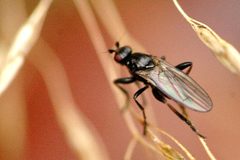
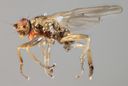
Copromyza equina is a small dung fly in the Sphaeroceridae, commonly known as lesser dung flies. The was described by Fallén in 1820 and has been recorded from several islands in the Azores archipelago. Sphaeroceridae are among the most species-rich families of Diptera, with members typically associated with decaying organic matter.
Pronunciation
How to pronounce Copromyza equina: /kɔ.prəˈmaɪ.zə ɛˈkwaɪ.nə/
These audio files are automatically generated. While they are not always 100% accurate, they are a good starting point.
Identification
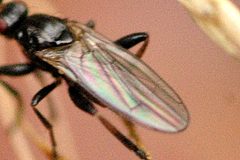
Members of Copromyza can be distinguished from other sphaerocerid by the combination of a reduced anal in the wing and specific chaetotaxy patterns on the . C. equina specifically requires examination of male terminalia for definitive identification; the lacks the distinctive modified fore seen in some .
Images
Distribution
Recorded from the Azores: Faial, Flores, Pico, São Miguel, and Terceira islands. The has a broader distribution in the Palearctic region, including Europe.
Ecological Role
As with other Sphaeroceridae, this likely contributes to nutrient cycling through association with decaying organic substrates.
Similar Taxa
- Copromyza sordidaOverlapping distribution and similar size; distinguished by differences in male genitalia and leg chaetotaxy
- Other Copromyza species-level characters require microscopic examination; identification typically requires dissection of male terminalia
More Details
Taxonomic note
The Copromyza belongs to the Copromyzinae, one of several subfamilies within Sphaeroceridae. The is sometimes referred to as 'Borboridae' in older literature.
Collection records
Azorean records suggest this has established across multiple islands in the archipelago, though specific details from these collections are not available in the provided sources.