
Copromyzinae
Stenhammer, 1854
Copromyzinae
Genus Guides
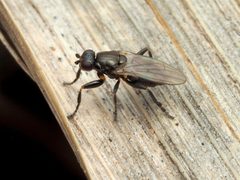
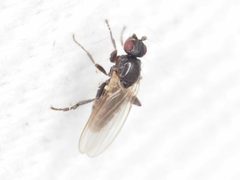
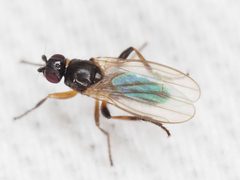
4Copromyzinae is a of small flies within the Sphaeroceridae, commonly known as lesser dung flies. The subfamily was established by Stenhammer in 1854 and contains approximately 19 , including Copromyza, the type genus. Members of this subfamily are characterized by their association with decaying organic matter, particularly , and are found across diverse geographic regions. The subfamily is well-represented in entomological collections, with over 2,600 observations documented on iNaturalist.
Pronunciation
How to pronounce Copromyzinae: /koʊprəˈmɪzɪni/
These audio files are automatically generated. While they are not always 100% accurate, they are a good starting point.
Identification
Copromyzinae can be distinguished from other of Sphaeroceridae by a combination of morphological features, though specific diagnostic characters vary among . The subfamily generally exhibits reduced chaetotaxy (bristle arrangement) compared to related groups. -level identification typically requires examination of male genitalia and detailed antennal structure. Members are small-bodied flies, usually 2-5 mm in length, with characteristic sphaerocerid body plan including short and compact .
Images
Habitat
within Copromyzinae are primarily associated with decomposing organic substrates, particularly animal and decaying plant matter. range from terrestrial environments including pastures, forests, and wetlands to settings near human habitation. Moisture availability and organic decomposition stage are key habitat determinants. Some show preferences for specific substrate types, though detailed habitat partitioning among genera remains incompletely documented.
Distribution
The has a worldwide distribution, with documented presence across multiple continents. Individual show varying geographic ranges: Copromyza and Crumomyia are broadly distributed in the Holarctic region, while genera such as Norrbomia and Immoderatus have more restricted distributions. The subfamily is represented in both temperate and tropical zones, with highest likely in the Palearctic and Nearctic regions based on current taxonomic records.
Ecological Role
Members of Copromyzinae contribute to nutrient cycling through their association with decomposing organic matter. As larvae develop in and decaying substrates, they participate in the breakdown and mineralization of organic material. flies may serve as prey for various including spiders, predatory insects, and birds. Their presence in dung indicates processes related to decomposition and nutrient availability.
Human Relevance
Copromyzinae has limited direct economic importance. The is occasionally encountered in contexts due to its association with decomposing matter. Some may occur in agricultural settings, particularly in livestock operations where accumulation provides . The group is primarily of scientific interest for studies on dipteran , biodiversity of saprobic , and decomposition .
Similar Taxa
- LimosininaeAnother of Sphaeroceridae; Limosininae typically exhibits more extensive chaetotaxy and different wing venation patterns, though definitive separation requires detailed morphological examination
- Sphaerocerinae within same ; Sphaerocerinae generally has more robust body structure and distinct antennal , with some showing characteristic wing markings absent in Copromyzinae
More Details
Taxonomic History
The was established by Stenhammer in 1854. Generic composition has undergone significant revision, with many transferred in or out based on phylogenetic analyses. The genus Copromyza, established by Fallén in 1810, serves as the type genus. Recent taxonomic work by Papp (1973, 1988, 2004) has added several new genera including Richardsia, Norrbomia, and Immoderatus.
Phylogenetic Position
Copromyzinae is one of several within Sphaeroceridae, a placed in the superfamily Sphaeroceroidea. The family's position within has been subject to revision, with molecular and morphological studies continuing to refine relationships among sphaerocerid subfamilies.