
Gymnochiromyia flavella
(Zetterstedt, 1848)
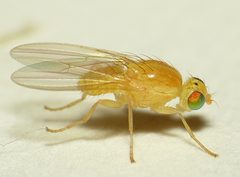
Gymnochiromyia flavella is a small yellow fly in the Chyromyidae, measuring 1.5–2 mm in length. It is characterized by distinctive and thoracic setation patterns that aid in identification. The is distributed across the Palearctic region, with confirmed records from Denmark, Norway, and Sweden.
Pronunciation
How to pronounce Gymnochiromyia flavella: //ˌɡɪmnəˌkaɪroʊˈmaɪə fləˈvɛlə//
These audio files are automatically generated. While they are not always 100% accurate, they are a good starting point.
Identification
Distinguished from similar chyromyids by the combination of: three pairs of orbital setae with specific orientation ( medial, posteriorly directed); naked sternopleura; four pairs of dorsocentral setae; and four rows of acrostichal setae. The small size (1.5–2 mm) and yellow coloration are consistent with the but specific setal patterns are diagnostic.
Images
Appearance
A minute yellow fly, 1.5–2 mm in length. with transversely oval , convex occiput, closely set and crossed parietal setae, and three pairs of orbital setae ( pair directed medially, pair directed posteriorly). with naked sternopleura, four pairs of dorsocentral setae, and four rows of acrostichal setae.
Distribution
Palearctic region. Confirmed present in Denmark (DK), Norway (NO), and Sweden (SE).
Similar Taxa
- Other Gymnochiromyia speciesShare small size and yellow coloration; require examination of setal patterns on and for definitive separation.
- Other ChyromyidaeSimilar minute size and pale coloration; -level characters include reduced wing venation and specific chaetotaxy, but and identification requires detailed setal examination.
More Details
Taxonomic history
Originally described by Zetterstedt in 1848. The has been subject to limited modern study, with most available information derived from morphological descriptions in taxonomic literature.
Data limitations
Despite being a described with a known distribution, biological and ecological data for G. flavella remain sparse. The low number of iNaturalist observations (7) reflects both its small size and likely under-sampling of its rather than rarity.