
Sepsis
Fallén, 1810
black scavenger flies, ensign flies
Species Guides
2- Sepsis neocynipsea(black scavenger fly)
- Sepsis punctum
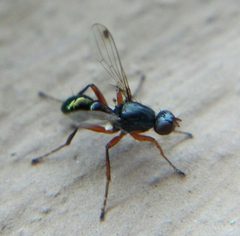
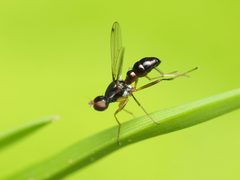
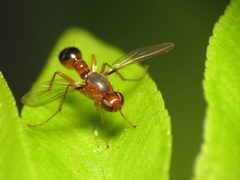
Sepsis is a of small flies in the Sepsidae, commonly known as black scavenger flies or ensign flies. These flies are characterized by their distinctive wing-waving and association with decaying organic matter. The genus contains numerous distributed across temperate and tropical regions worldwide. are typically black with silvery or metallic markings and possess a characteristic humpbacked appearance.
Pronunciation
How to pronounce Sepsis: /ˈsɛp.sɪs/
These audio files are automatically generated. While they are not always 100% accurate, they are a good starting point.
Identification
Sepsis are small (2-6 mm), slender flies with predominantly black bodies and silvery markings on the . They exhibit a characteristic humpbacked thorax profile and reduced profile. The wings are typically clear with dark markings or patterns, and are often held outstretched and waved in a distinctive semaphore-like motion when at rest. Males frequently have modified forelegs with spines or other structures used in mating. The is usually slender and may show in shape and coloration.
Images
Habitat
Found in diverse including meadows, pastures, wetlands, and urban areas. are commonly associated with decaying plant matter, , and other decomposing organic substrates. Larval development occurs in moist decaying vegetation, animal , and compost. Some show preference for specific substrates such as cattle dung or rotting fungi.
Distribution
Widespread across the Holarctic region with records from Europe (Denmark, Norway, Sweden), North America (including Vermont, USA), and extending into temperate Asia. GBIF distribution records indicate presence in multiple continents with highest diversity in the Palearctic region.
Seasonality
are active primarily during warmer months, with peak activity in late spring through autumn in temperate regions. Some overwinter as adults or pupae. Activity patterns vary by species and latitude, with multivoltine in favorable climates.
Diet
feed on nectar, honeydew, and liquid exudates from decaying organic matter. Larvae are saprophagous, developing in decaying vegetation, , and other decomposing substrates.
Life Cycle
Complete with , larval, pupal, and stages. Females deposit eggs in moist decaying organic matter. Larvae pass through three instars before pupating in the substrate or nearby soil. Development time varies with temperature and substrate quality, with multiple possible per year in favorable conditions.
Behavior
are known for distinctive wing-waving , repeatedly raising and lowering wings while or standing. This semaphore-like display is thought to function in recognition and mate attraction. Males engage in lekking behavior on prominent substrates and compete for access to females. Both sexes are agile fliers with rapid, darting patterns.
Ecological Role
Decomposers contributing to nutrient cycling through larval consumption of decaying organic matter. serve as of small flowers and prey for various including spiders and birds. Some are indicators of pasture quality and cattle presence due to association with .
Human Relevance
Generally harmless to humans; occasionally considered nuisance flies when abundant near compost or livestock facilities. Used as model organisms in behavioral research, particularly for studies of and mating . Some serve as indicators in due to predictable of carrion.
Similar Taxa
- ThemiraSimilar small black sepsid flies with wing-waving , but Themira typically have more robust body proportions and different wing venation patterns
- Sepsidae (other genera)Other sepsid share characteristics but differ in body shape, leg modifications, and specific wing patterns; precise identification requires examination of male genitalia and leg structures
Sources and further reading
- BugGuide
- Wikipedia
- GBIF taxonomy match
- iNaturalist taxon
- NCBI Taxonomy
- Catalogue of Life
- Why a UC Davis Entomology Lab Is Pursuing Human Health Issues | Bug Squad
- Nimba toads' exceptional reproductive biology | Blog
- Bug Eric: Last Night to Blacklight?
- Neonatal Sepsis-Culture Positive Sepsis Vs Clinical Sepsis
- The Role of Leukocytes in Disseminated Intravascular Coagulation Associated with Sepsis
- Baseline RDW combined with dynamic trajectory: Predictive value for 30-day all-cause mortality in patients with sepsis-induced coagulopathy and development of a nomogram.