
Odiniidae
Hendel, 1920
Genus Guides
2is a small of acalyptrate flies comprising approximately 58 described distributed across all major biogeographic realms. The family contains two : Odiniinae and Traginopinae. Biological information remains sparse for most species, with documented for only a few members of the Odinia.
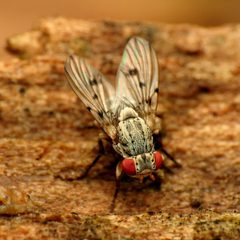
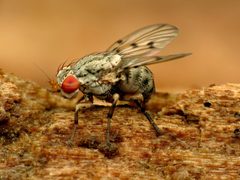
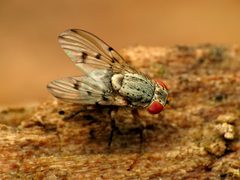
Pronunciation
How to pronounce Odiniidae: //oʊˈdɪni.aɪdiː//
These audio files are automatically generated. While they are not always 100% accurate, they are a good starting point.
Identification
are small acalyptrate flies. Identification to and level requires specialized keys; Cogan (1975) provides keys to Afrotropical genera and species, while Prado (1973) offers keys to world genera. The is distinguished from related acalyptrate families by combinations of chaetotaxy, wing venation, and genitalic characters, though specific diagnostic features vary among genera.
Images
Habitat
Larvae inhabit tunnels in dead wood, specifically those created by wood-boring beetles, , and other flies. are found in association with these larval .
Distribution
Representatives occur in all major biogeographic realms: Palaearctic, Nearctic, Neotropical, Afrotropical, Oriental, and Australasian/Oceanian. Distribution records include Denmark, Norway, and Sweden.
Diet
Larvae function as scavengers or of larvae within wood-boring tunnels. The specific dietary habits of remain undocumented.
Host Associations
- wood-boring Coleoptera - larval and food sourcelarvae occupy tunnels of wood-boring larvae
- wood-boring Lepidoptera - larval and food sourcelarvae occupy tunnels of wood-boring larvae
- wood-boring Diptera - larval and food sourcelarvae occupy tunnels of other wood-boring fly larvae
- Pseudococcus comstocki - Turanodinia coccidarum reared from masses of this mealybug
Life Cycle
Larval development occurs within tunnels of wood-boring insects. The of at least one Afrodinia has been described. Complete details remain unknown for most species.
Behavior
Larvae have been observed to have or scavenging relationships with xylophilous insects. Possible has been suggested for Odinia foliata larvae, though this requires confirmation.
Ecological Role
Larvae act as entomophages of xylophilous insects in dead wood, potentially regulating of wood-boring beetles, , and other flies. Their role as versus scavengers remains partially unresolved.
Similar Taxa
- DiastatidaeHistorically confused with ; both are small acalyptrate . Cogan (1975) treated both families together in his revision of Ethiopian region .
- AulacigastridaeAnother small of acalyptrate flies associated with wood and bark ; may be encountered in similar collecting situations.
More Details
Taxonomic composition
The comprises two : Odiniinae (Afrodinia, Neoalticomerus, Odinia, Turanodinia) and Traginopinae (Coganodinia, Helgreelia, Lopesiodinia, Neoschildomyia, Neotraginops, Paratraginops, Pradomyia, Schildomyia, Shewellia, Traginops).
Data deficiency
No biological information is available for the majority of in the . The 58 described species represent a significant underestimate of true diversity given the family's wide geographic distribution and specialized .
Sources and further reading
- BugGuide
- Wikipedia
- GBIF taxonomy match
- iNaturalist taxon
- NCBI Taxonomy
- Catalogue of Life
- Family Odiniidae (Insects: Diptera) associated with beetles that feed on wood.
- The Puparium of anAfrodiniaSpecies (Diptera: Odiniidae) from South Africa, with a Review of the Known Immature Stages of Odiniidae and Notes on Biology and Functional Morphology
- Habitat and trophic relationships of an odiniid fly <i>Odinia foliata</i> Krivosheina, 1979 (Diptera, Odiniidae)