
Asteia
Meigen, 1830
Species Guides
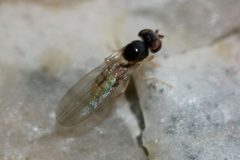
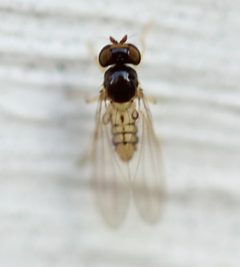
1Asteia is a of small acalyptrate flies in the Asteiidae, comprising approximately 130 worldwide. The genus includes both Palearctic and Hawaiian species, with notable diversification in the Hawaiian archipelago. Males of at least one species form on vegetation and engage in trophallactic courtship . Ecological associations remain poorly documented for most species.
Pronunciation
How to pronounce Asteia: /æˈstiːə/
These audio files are automatically generated. While they are not always 100% accurate, they are a good starting point.
Images
Habitat
Vegetation in diverse settings including moist shelter caves, low shrubs, and forest trees such as Acacia koa and Lobelia hypoleuca. Collection records indicate association with seeps, streams, and vegetation edges.
Distribution
Palearctic region (including Denmark, Norway, Sweden); Hawaiian Islands (Nihoa, Necker, Kauai, Oahu, Molokai, Lanai, Maui, Hawaii) with multiple .
Host Associations
- Erythrina - rearing Asteia montgomeryi
- Pisonia - rearing Asteia sabroskyi
- Urera - rearing Asteia sabroskyi
- Charpentiera - rearing Asteia sabroskyi
- Hibiscadelphus - rearing Asteia sabroskyi
Behavior
Males of Asteia elegantula form on leaves or twigs. Courtship involves : males offer regurgitated droplets to females, which are consumed during early mating stages. Males subsequently search for and consume droplet remains after copulation.
More Details
Hawaiian diversification
Five Hawaiian (A. hawaiiensis, A. mauiensis, A. molokaiensis, A. palikuensis, A. sabroskyi) were previously considered single-island endemics. New distributional records reduced this proportion from 78% to 33%, altering interpretations of diversification processes in this lineage.