
Asteiidae
Loew
Fine Flies
Genus Guides
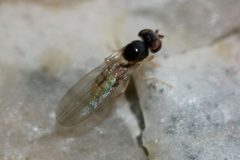
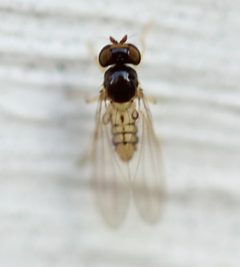
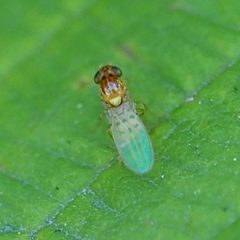
4is a small of acalyptrate flies comprising approximately 130 in 10 worldwide. are minute to small (1–3 mm), delicate flies with thin bodies and relatively long, transparent wings. The family is rarely collected, likely due to their small size and inconspicuous habits. Most species are found in forested , with adults often observed on flowers, low vegetation, and fungi.
Pronunciation
How to pronounce Asteiidae: /ˈæstiːɪɪdiː/
These audio files are automatically generated. While they are not always 100% accurate, they are a good starting point.
Identification
Distinguished from other small acalyptrate flies by the combination of: minute size (1–3 mm), delicate weakly sclerotized body, long transparent wings with basal and discoidal , absence of anal cell and anal , rounded with distinct male interfrontal stripes, and with zigzag ray pattern. The reduced subcosta and lack of preapical tibial bristle further separate from similar .
Images
Habitat
Forest , particularly in vegetation near seeps and streams. found on flowers, low vegetation, mushrooms, bracket fungi, and occasionally at tree wounds. Some associated with specific microhabitats including moist shelter caves and gulches.
Distribution
Host Associations
- Erythrina - rearing recordAsteia montgomeryi
- Pisonia - rearing recordAsteia sabroskyi
- Urera - rearing recordAsteia sabroskyi
- Charpentiera - rearing recordAsteia sabroskyi
- Hibiscadelphus - rearing recordAsteia sabroskyi
- Cannabis sativa - rearing record reared from stalks
- Fungi - associationLeiomyza found on mushrooms and bracket fungi; adults reared from fungi
Behavior
often congregate at specific sites, making them susceptible to collection with vacuum cleaners. Adults of Astiosoma rufifrons are attracted to wood ash after bonfires, especially in evening. Adults generally sedentary.
Ecological Role
Larvae may act as scavengers in of other insects or on insect excrement, though this remains speculative.
Human Relevance
No significant economic or medical importance. Occasionally found indoors at windows.
Similar Taxa
- LauxaniidaeSimilar small acalyptrate flies, but Lauxaniidae are more active in late afternoon, prefer shaded humid places near streams, and have different wing venation
- other small acalyptrate families distinguished by combination of minute size, delicate build, specific wing venation features ( , reduced subcosta, absent anal cell), and male interfrontal stripes
Sources and further reading
- BugGuide
- Wikipedia
- GBIF taxonomy match
- iNaturalist taxon
- NCBI Taxonomy
- Catalogue of Life
- Investigation of the families Asteiidae, Lauxaniidae, Mydidae, and Neriidae (Insecta: Diptera)
- Studies in Hawaiian Diptera I: New Distributional Records for Endemic Asteia (Asteiidae)
- Investigation of the families Asteiidae, Lauxaniidae, Mydidae, and Neriidae (Insecta: Diptera)
- The Mating Behavior of Asteia elegantula with Biological Notes on Some Other Asteiidae (Diptera)