
Besseria
Robineau-Desvoidy, 1830
Species Guides
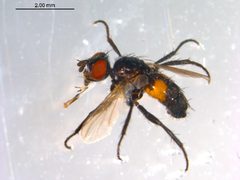
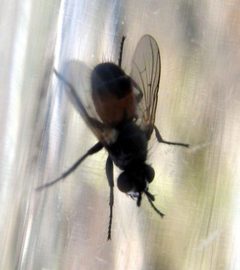
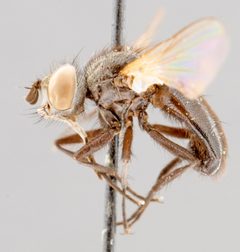
3Besseria is a of tachinid flies (Diptera: Tachinidae) in the Phasiinae. The genus was established by Robineau-Desvoidy in 1830 and contains approximately 15 described . Species are distributed across the Palearctic region, with records from northern Europe including Denmark, Norway, and Sweden. As members of the Tachinidae , these flies are presumed to be , though specific associations for most Besseria species remain undocumented.
Pronunciation
How to pronounce Besseria: //bɛˈsɛ.ri.a//
These audio files are automatically generated. While they are not always 100% accurate, they are a good starting point.
Images
Distribution
Palearctic region. Documented occurrences include Denmark, Norway, and Sweden. The has a primarily northern and central European distribution, though some may range more broadly across Eurasia.
Ecological Role
As members of the Tachinidae , in this are presumed to function as of other insects, contributing to of potential species. Specific ecological roles have not been documented for individual Besseria species.
More Details
Taxonomic history
The was established by Robineau-Desvoidy in 1830. It is classified within the tribe Cylindromyiini of the Phasiinae. The type is Besseria reflexa Robineau-Desvoidy, 1830.
Species diversity
Fifteen are currently recognized: Besseria anthophila, B. brevipennis, B. caffra, B. dimidiata, B. excavata, B. fossulata, B. incompleta, B. lateritia, B. melanura, B. nuditibia, B. oblita, B. pilimacula, B. prophetarum, B. reflexa, and B. zonaria.