
Helicobia
Coquillett, 1895
flesh flies
Species Guides
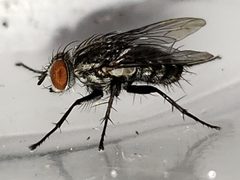
1Helicobia is a of flesh flies (Sarcophagidae) comprising at least 30 described . Members are necrophagous and associated with decomposing animal matter. The genus has been studied for its forensic importance, particularly in estimating postmortem intervals. Research on Helicobia aurescens has provided detailed data and ultrastructural descriptions of stages.
Pronunciation
How to pronounce Helicobia: //ˌhɛlɪˈkoʊbiə//
These audio files are automatically generated. While they are not always 100% accurate, they are a good starting point.
Images
Habitat
Associated with carcasses of pigs, rats, dogs, fish, and bovine liver. Found in urban waste environments and on putrefied meat.
Distribution
Neotropical; native to North and South America. Documented from Rio de Janeiro, Brazil.
Diet
Necrophagous; feeds on decaying animal matter including carcasses and putrefied meat. Saprophagous on decaying organic matter.
Life Cycle
Complete with , three larval instars, pupa, and stages. Females are primarily larviparous, depositing first-instar larvae rather than eggs. Development rate is temperature-dependent; larval development is slower at 27°C than at 29°C. Larvae abandon food source after 3–5 days to pupate. Larviposition occurs over extended periods: 38 days at 27°C and 21 days at 29°C, with multiple peaks in activity.
Behavior
Females require protein sources for ovarian development and larviposition. Larvae exhibit feeding, which generates heat that can accelerate development. Larviposition shows rhythmic peaks in activity.
Ecological Role
Decomposer of animal carcasses. Forensically important for postmortem interval estimation. Potential in .
Human Relevance
Significance in for estimating time since death. Association with carrion may bring flies into proximity with human habitation and livestock facilities.