
Gasterophilinae
stomach bot flies
Genus Guides
1- Gasterophilus(Horse Botflies)
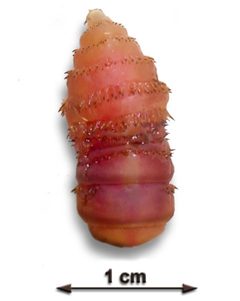
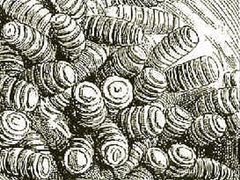
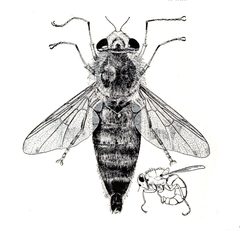
Gasterophilinae is a of Oestridae containing large, parasitic flies whose larvae develop in the digestive tracts of herbivorous mammals. The group includes three with distinct specializations: Gasterophilus (equids including horses, zebras, and donkeys), Gyrostigma (rhinoceroses), and Cobboldia (elephants). are short-lived, non-feeding, and exhibit specialized oviposition . Larvae are obligate that complete development in the host alimentary tract, causing veterinary significance. The subfamily has achieved near- distribution through association with domestic horses.
Pronunciation
How to pronounce Gasterophilinae: /ˌɡæstɛroʊˈfaɪlɪniː/
These audio files are automatically generated. While they are not always 100% accurate, they are a good starting point.
Identification
Distinguished from other Oestridae by larval in the digestive tract rather than subcutaneous tissues or body cavities. Gasterophilus can be separated from Gyrostigma and Cobboldia by association (equids vs. rhinoceroses/elephants). -level identification of relies on antennal characters including pedicellar button number (two in G. pecorum, one in other Gasterophilus species) and distribution. Larval identification uses mouth-hook curvature and body spiculation patterns.
Images
Habitat
Terrestrial environments associated with mammals. occur near hosts or at hilltop sites for mating. are deposited on host hair (lips, chin, cheeks, forelegs, neck) or on grass blade tips (G. pecorum). Larval development occurs in the alimentary tract of hosts; mature larvae are excreted with and pupate in soil.
Distribution
Originally restricted to the Palaearctic and Afrotropical regions; now near- due to association with domestic equids. Highest for Gasterophilus in China and South Africa (seven each), followed by Mongolia, Senegal, and Ukraine (six species each). Gyrostigma and Cobboldia remain restricted to Africa and parts of Asia where wild persist.
Seasonality
activity is brief, with lifespans of 3–5 days. Seasonality varies by region and availability. In temperate climates, third instar larvae require 9–10 months of development, with pupal periods of 12–34 days.
Diet
are non-feeding with reduced mouthparts. Larvae are obligate feeding on tissues and blood in the alimentary tract using body spicules and oral hooks.
Host Associations
- Equus ferus caballus (domestic horse) - primary for Gasterophilus spp.
- Equus africanus asinus (domestic donkey) - for Gasterophilus spp.
- Equus quagga burchellii (Burchell's zebra) - for G. meridionalis and G. ternicinctus
- Equus hemionus hemionus (Mongolian wild ass) - for Gasterophilus spp.
- Equus hemionus onager (Persian onager) - for Gasterophilus spp.
- Equus zebra (mountain zebra) - for Gasterophilus spp.
- Equus przewalskii (wild horse) - for Gasterophilus spp.
- Ceratotherium simum (white rhinoceros) - primary for Gyrostigma rhinocerontis
- Diceros bicornis (black rhinoceros) - for Gyrostigma spp.
- Elephas maximus (Asian elephant) - for Cobboldia spp.
- Loxodonta africana (African elephant) - for Cobboldia spp.
Life Cycle
Complete . Embryonic development lasts 2–10 days. Larvae hatch spontaneously or in response to moisture and friction from . First instar larvae penetrate skin or migrate on mucosal surfaces to reach the , then migrate to specific sites (stomach, duodenum, or depending on ). Second and third instar development totals approximately 11 months in temperate climates. Mature larvae are excreted with and pupate in soil for 12–34 days. eclose after 2–5 weeks, mate soon after , and live 3–5 days.
Behavior
exhibit hilltop for mating. Females display -specific oviposition strategies: 'hit-and-flee' (rapid collision with , deposition, immediate departure) or hovering to deposit multiple eggs. G. pecorum uniquely lays eggs off-host on grass blade tips in rows of 10–15 eggs. First instar larvae show species-specific routes: subcutaneous penetration to mouth (most species), mucosal surface migration to inter-dental spaces (G. nasalis), or direct mouth mucosa penetration (G. pecorum). Third instar larvae of G. haemorrhoidalis detach and re-attach in the .
Ecological Role
Obligate of Perissodactyla with veterinary significance; heavy can cause serious injury or death to . Near- distribution facilitated by domestic horse trade. Potential role in regulating wild equid . Introduction to new via international wildlife trade poses risks.
Human Relevance
Veterinary of significant economic importance in horse husbandry. Larval (gasterophilosis) can cause gastric ulcers, obstruction, and secondary complications requiring anthelmintic treatment. International movement of domestic and wild animals has facilitated global spread and introduced to new regions, as documented with Gyrostigma in Brazilian zoos.
Similar Taxa
- Hypodermatinae (warble flies)Also Oestridae with mammalian , but larvae develop in subcutaneous tissues rather than digestive tract; have different oviposition .
- Oestrinae (head bot flies)Also Oestridae, but larvae develop in nasal cavities and frontal sinuses of rather than stomach; differ in and .
- Cuterebrinae (rodent bot flies)New World Oestridae with larvae in subcutaneous tissues of rodents and lagomorphs; distinct range and larval .
More Details
Taxonomic history
Historically treated as a separate (Gasterophilidae), but all recent classifications place Gasterophilinae firmly within Oestridae based on phylogenetic evidence.
Morphological synapomorphies
Five potential synapomorphies unite Gasterophilus and Gyrostigma as sister groups, including distinctive upward-curving mouth-hooks in first instar larvae and specific antennal configurations.
Conservation implications
specificity means that Gasterophilinae are threatened by declines in their wild host ; Gyrostigma and Cobboldia are particularly vulnerable due to endangerment of rhinoceros and elephant populations.
Sources and further reading
- BugGuide
- Wikipedia
- iNaturalist taxon
- NCBI Taxonomy
- Catalogue of Life
- The antenna of horse stomach bot flies: morphology and phylogenetic implications (Oestridae, Gasterophilinae: Gasterophilus Leach)
- Taxonomic review of Gasterophilus (Oestridae, Gasterophilinae) of the world, with updated nomenclature, keys, biological notes, and distributions
- Gyrostigma rhinocerontis (Diptera: Oestridae, Gasterophilinae) in white rhinoceroses (Ceratotherium simum) imported from South Africa: occurrence in Itatiba, São Paulo, Brazil
- Three-dimensional characterization of first instar horse and rhinoceros stomach bot fly larvae (Oestridae: Gasterophilinae:Gasterophilus,Gyrostigma): novel morphology and evolutionary implications
- Figure 6 from: Li X-Y, Pape T, Zhang D (2019) Taxonomic review of Gasterophilus (Oestridae, Gasterophilinae) of the world, with updated nomenclature, keys, biological notes, and distributions. ZooKeys 891: 119-156. https://doi.org/10.3897/zookeys.891.38560
- Figure 8 from: Li X-Y, Pape T, Zhang D (2019) Taxonomic review of Gasterophilus (Oestridae, Gasterophilinae) of the world, with updated nomenclature, keys, biological notes, and distributions. ZooKeys 891: 119-156. https://doi.org/10.3897/zookeys.891.38560
- Figure 17 from: Li X-Y, Pape T, Zhang D (2019) Taxonomic review of Gasterophilus (Oestridae, Gasterophilinae) of the world, with updated nomenclature, keys, biological notes, and distributions. ZooKeys 891: 119-156. https://doi.org/10.3897/zookeys.891.38560
- Figure 2 from: Li X-Y, Pape T, Zhang D (2019) Taxonomic review of Gasterophilus (Oestridae, Gasterophilinae) of the world, with updated nomenclature, keys, biological notes, and distributions. ZooKeys 891: 119-156. https://doi.org/10.3897/zookeys.891.38560
- Figure 12 from: Li X-Y, Pape T, Zhang D (2019) Taxonomic review of Gasterophilus (Oestridae, Gasterophilinae) of the world, with updated nomenclature, keys, biological notes, and distributions. ZooKeys 891: 119-156. https://doi.org/10.3897/zookeys.891.38560
- Figure 16 from: Li X-Y, Pape T, Zhang D (2019) Taxonomic review of Gasterophilus (Oestridae, Gasterophilinae) of the world, with updated nomenclature, keys, biological notes, and distributions. ZooKeys 891: 119-156. https://doi.org/10.3897/zookeys.891.38560
- Figure 15 from: Li X-Y, Pape T, Zhang D (2019) Taxonomic review of Gasterophilus (Oestridae, Gasterophilinae) of the world, with updated nomenclature, keys, biological notes, and distributions. ZooKeys 891: 119-156. https://doi.org/10.3897/zookeys.891.38560
- Figure 4 from: Li X-Y, Pape T, Zhang D (2019) Taxonomic review of Gasterophilus (Oestridae, Gasterophilinae) of the world, with updated nomenclature, keys, biological notes, and distributions. ZooKeys 891: 119-156. https://doi.org/10.3897/zookeys.891.38560
- Figure 19 from: Li X-Y, Pape T, Zhang D (2019) Taxonomic review of Gasterophilus (Oestridae, Gasterophilinae) of the world, with updated nomenclature, keys, biological notes, and distributions. ZooKeys 891: 119-156. https://doi.org/10.3897/zookeys.891.38560
- Figure 13 from: Li X-Y, Pape T, Zhang D (2019) Taxonomic review of Gasterophilus (Oestridae, Gasterophilinae) of the world, with updated nomenclature, keys, biological notes, and distributions. ZooKeys 891: 119-156. https://doi.org/10.3897/zookeys.891.38560
- Figure 5 from: Li X-Y, Pape T, Zhang D (2019) Taxonomic review of Gasterophilus (Oestridae, Gasterophilinae) of the world, with updated nomenclature, keys, biological notes, and distributions. ZooKeys 891: 119-156. https://doi.org/10.3897/zookeys.891.38560
- Morphological Study of First Instar Elephant Stomach Bot Fly Larvae (Oestridae: Gasterophilinae: Cobboldia elephantis).