
Odontoloxozus longicornis
(Coquillett, 1904)
longhorn cactus fly
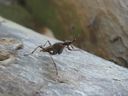
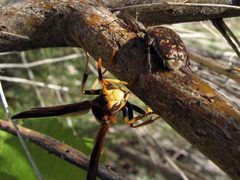
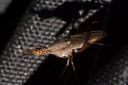
Odontoloxozus longicornis, commonly known as the longhorn cactus fly, is a of true fly in the Neriidae. This species exhibits complex reproductive including male territoriality at oviposition sites and postcopulatory guarding. Males adopt condition-dependent mating strategies, with larger individuals defending territories on giant saguaro cacti while smaller males search for females. The species has been documented in desert environments of the southwestern United States and Mexico.
Pronunciation
How to pronounce Odontoloxozus longicornis: /oʊˌdɒntoʊloʊkˈsəʊzəs ˌlɒŋɪˈkɔːrnɪs/
These audio files are automatically generated. While they are not always 100% accurate, they are a good starting point.
Images
Habitat
Desert environments with giant saguaro cacti (Carnegiea gigantea); males defend territories on cactus surfaces when conditions permit movement, while all males search within cactus when surface movement is restricted
Distribution
Pima County, Arizona; Mexico; Rica
Host Associations
- Carnegiea gigantea - oviposition site and territorial arenagiant saguaro cactus; males defend territories on cactus surface for mating access
Life Cycle
, larva, and pupa stages described in detail; stages have been morphologically characterized
Behavior
Males exhibit two distinct mating strategies maintained as mixed strategies in : territorial defense at oviposition sites versus searching for females. Larger males tend toward territoriality while smaller males adopt searching strategies. Strategy adoption is condition-dependent based on available cactus surface area. Postcopulatory guarding of females occurs. Repeated matings have been observed. When environmental conditions restrict movement, all males switch to searching within cactus .
More Details
Male Mating Strategies
Territorial strategies provide advantages of avoiding sperm displacement and encountering more fertile females, but incur higher investment costs and longer waiting times. Male territoriality is hypothesized to have evolved as an efficient form of postcopulatory guarding.
Nomenclature Note
The cactus was originally cited as 'Carnega gigantea' in source material; this is an older synonym for Carnegiea gigantea, the giant saguaro cactus.
Sources and further reading
- BugGuide
- Wikipedia
- GBIF taxonomy match
- NCBI Taxonomy
- Catalogue of Life
- Lab Study Shows Asian Longhorned Tick Can Spread Rocky Mountain Spotted Fever
- Be On the Lookout: There's a New Tick in Town
- Potential Range for Asian Longhorned Tick Covers Much of Eastern U.S.
- Invasive Tick Persists in New Jersey
- Invasive Tick Has Been Present in New York Longer Than Previously Known, Study Shows
- Different Tick, Same Repellents: CDC Study Shows How to Avoid Asian Longhorned Tick
- Studies on Odontoloxozus longicornis (Diptera: Neriidae). Part II. Distribution and Ecology1
- Studies on Odontoloxozus longicornis (Diptera: Neriidae). Part I. Life History and Descriptions of Immature Stages1
- Reproductive behavior of the cactus fly, Odontoloxozus longicornis, male territoriality and female guarding as adaptive strategies