
Odontoloxozus
Enderlein, 1922
cactus flies
Species Guides
1- Odontoloxozus longicornis(longhorn cactus fly)
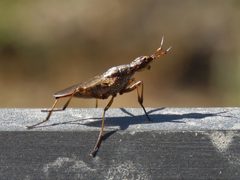
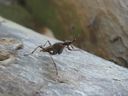
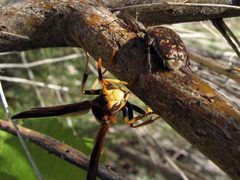
Odontoloxozus is a of cactus flies in the Neriidae, established by Enderlein in 1922. The genus contains at least three described distributed in the Americas. Members of this genus are associated with cactus , with detailed behavioral documented for Odontoloxozus longicornis in Arizona. Males exhibit territorial and alternative mating strategies related to body size and environmental conditions.
Pronunciation
How to pronounce Odontoloxozus: /oʊˌdɒntoʊˈlɒksəz/
These audio files are automatically generated. While they are not always 100% accurate, they are a good starting point.
Images
Habitat
Associated with cactus ; specifically documented from giant saguaro cacti (Carnegiea gigantea) in desert environments. Males of O. longicornis defend territories on cactus surfaces or search for females in within cacti depending on environmental conditions.
Distribution
Documented from Pima County, Arizona for O. longicornis. The includes with broader distribution: O. longicornis, O. pachycericola (described 1986), and O. peruanus (described 1937 from Peru).
Host Associations
- Carnegiea gigantea - /oviposition sitegiant saguaro cactus; documented for O. longicornis
Behavior
Males exhibit territoriality at oviposition sites and postcopulatory guarding of females. Two alternative male mating strategies exist: larger males defend territories on cactus surfaces when conditions permit, while smaller males search for females. When environmental conditions restrict movement, all males adopt searching in . Males engage in repeated matings with females.
Similar Taxa
- NeriusBoth belong to Neriidae and share the diagnostic character of antennal situated apically on the postpedicel; distinguished by forecoxa coloration and antennal proportions in identification keys
- GlyphidopsBoth in Neriidae with similar cactus-associated habits; distinguished in keys by forecoxa coloration (dark brown in Glyphidops versus yellow in Nerius, with Odontoloxozus having elongate antennal )
Sources and further reading
- BugGuide
- Wikipedia
- GBIF taxonomy match
- iNaturalist taxon
- NCBI Taxonomy
- Catalogue of Life
- Diptera | Beetles In The Bush | Page 7
- Studies on Odontoloxozus longicornis (Diptera: Neriidae). Part II. Distribution and Ecology1
- Reproductive behavior of the cactus fly, Odontoloxozus longicornis, male territoriality and female guarding as adaptive strategies
- Studies on Odontoloxozus longicornis (Diptera: Neriidae). Part I. Life History and Descriptions of Immature Stages1